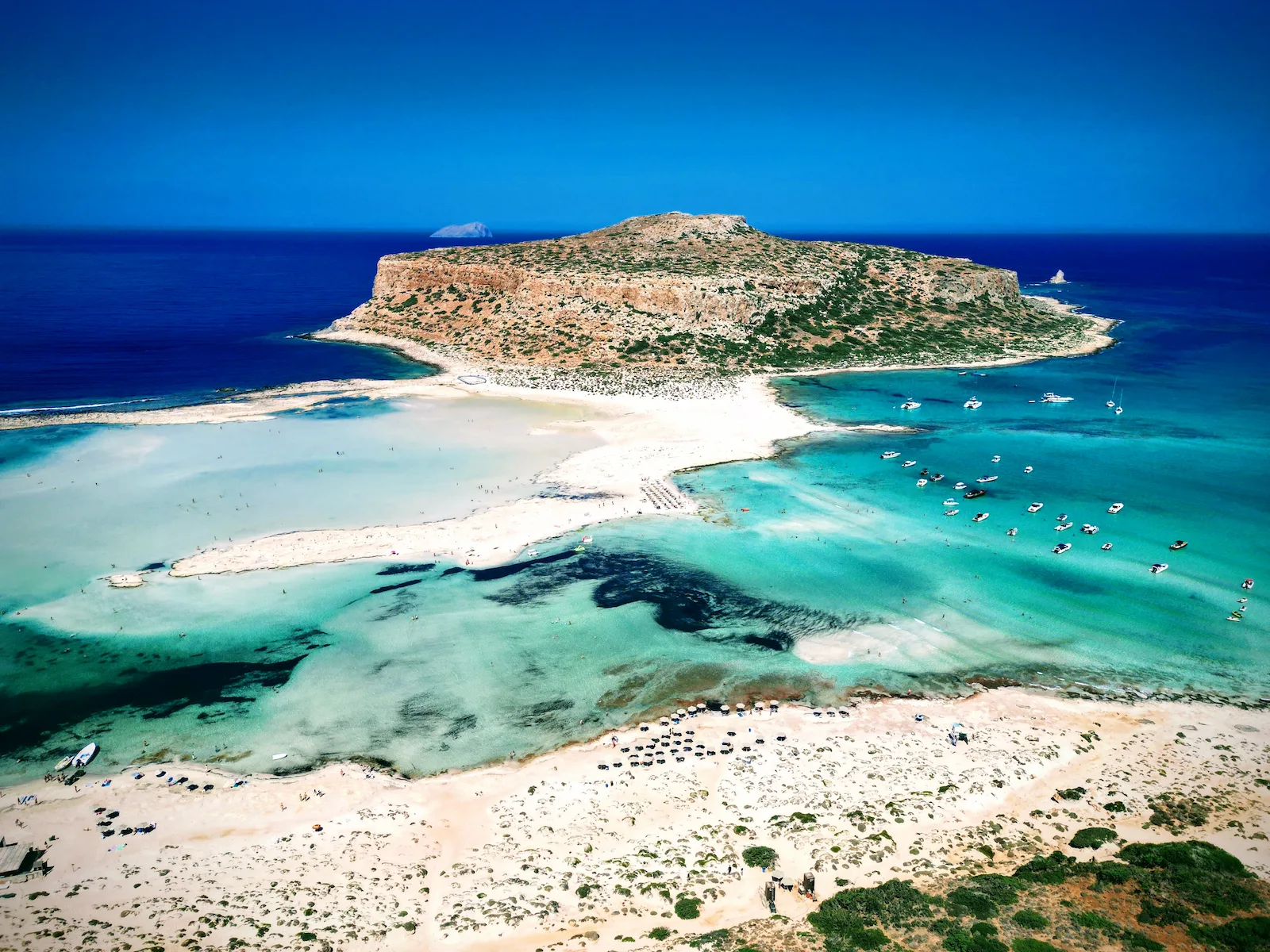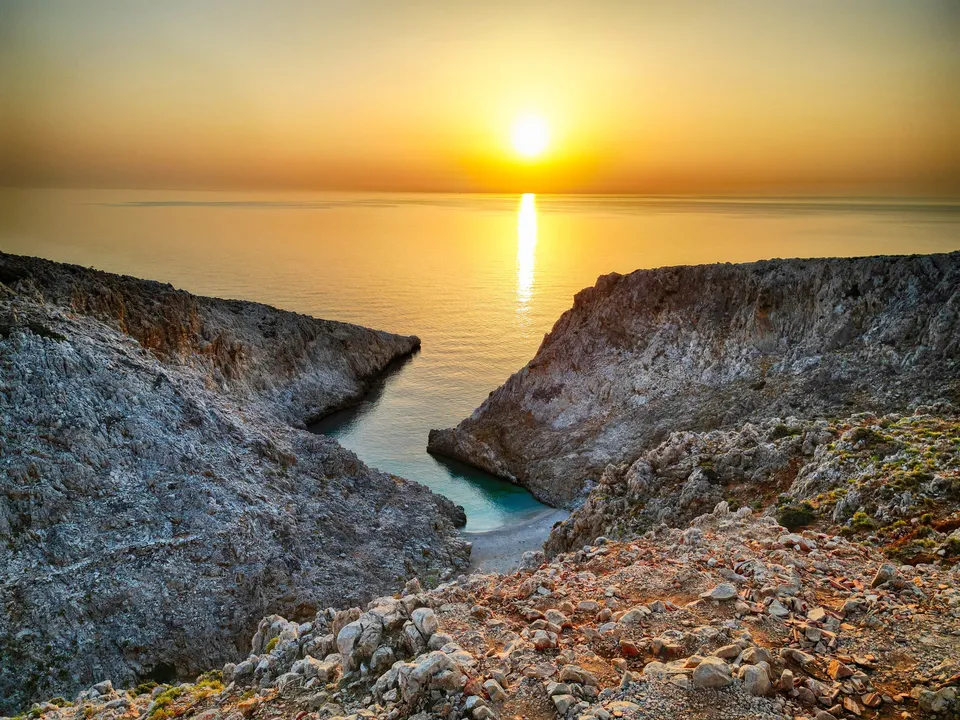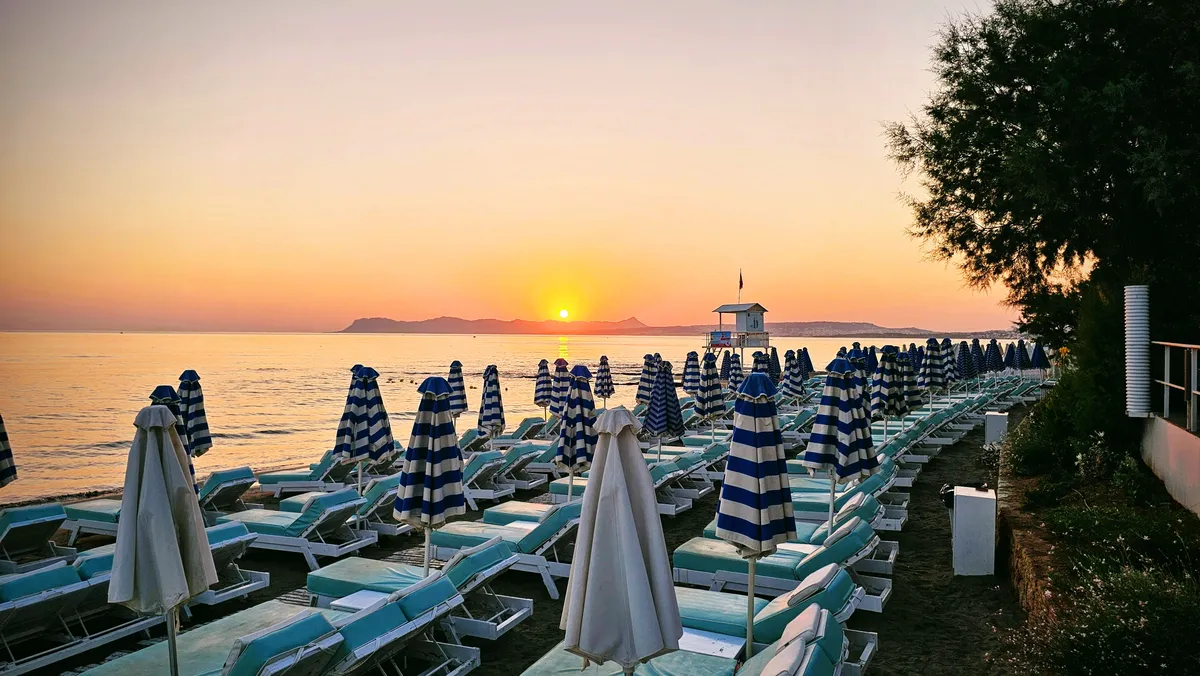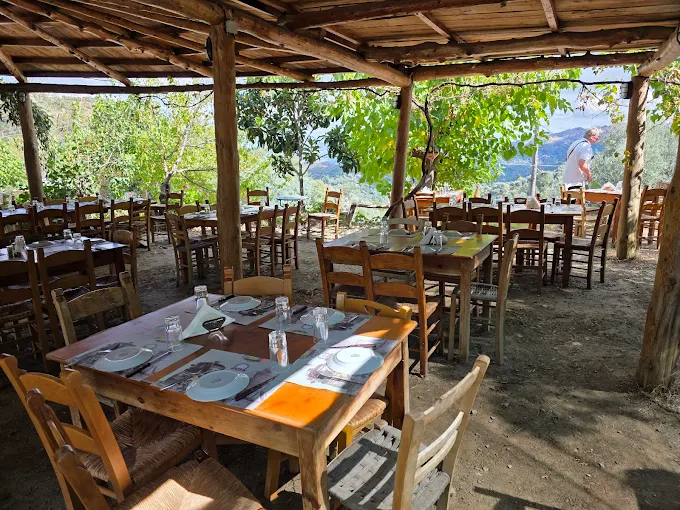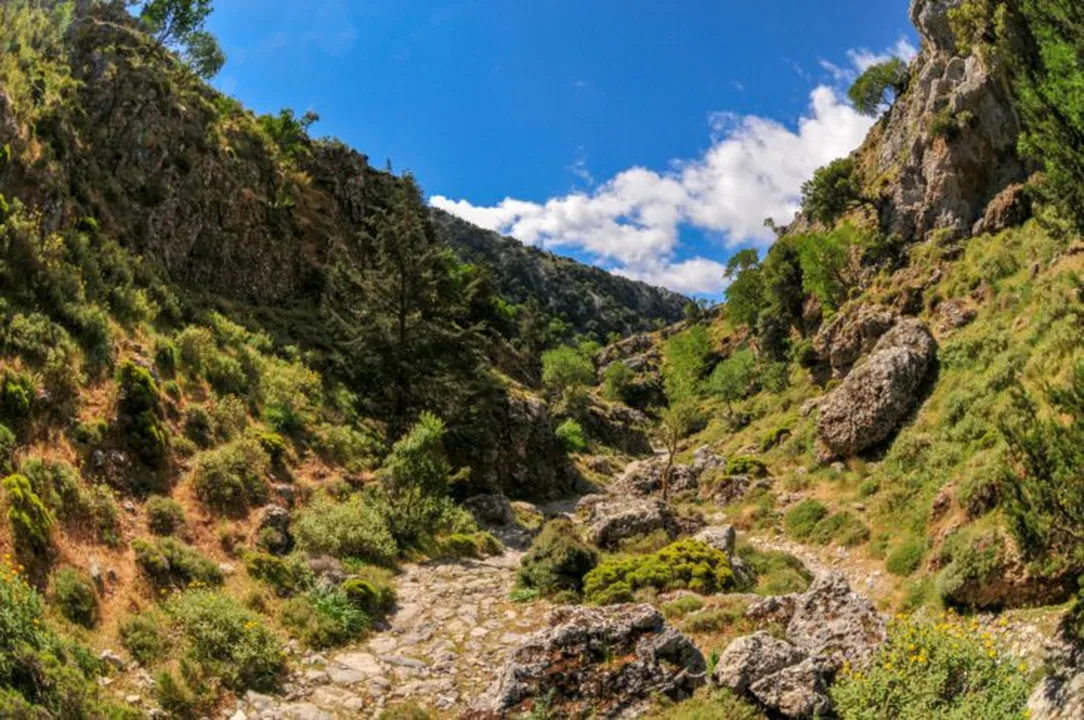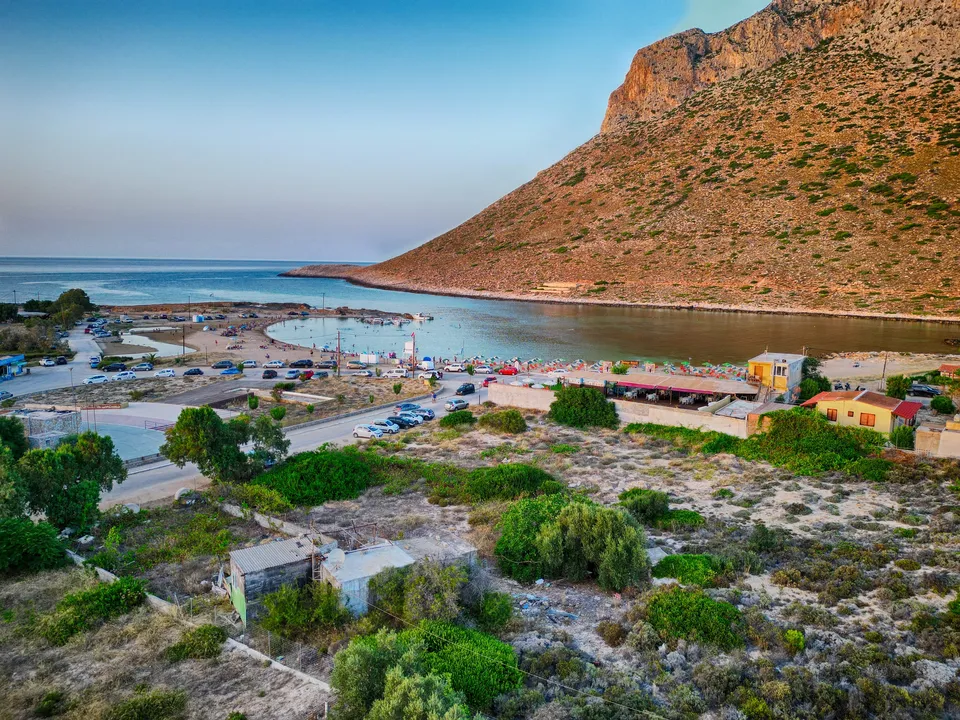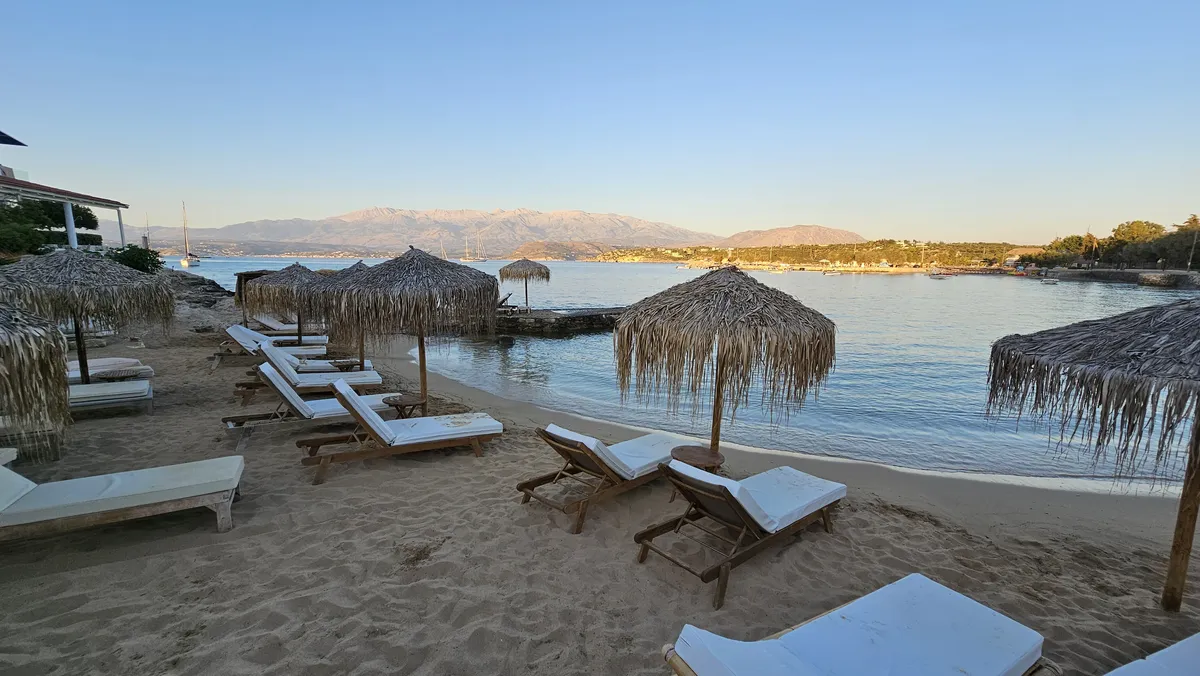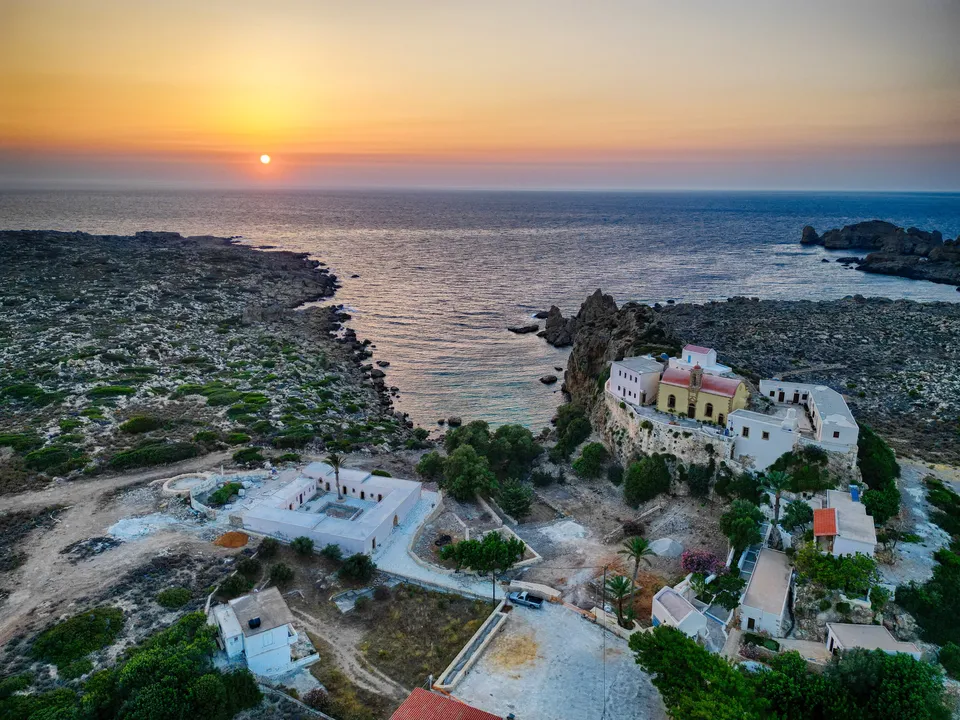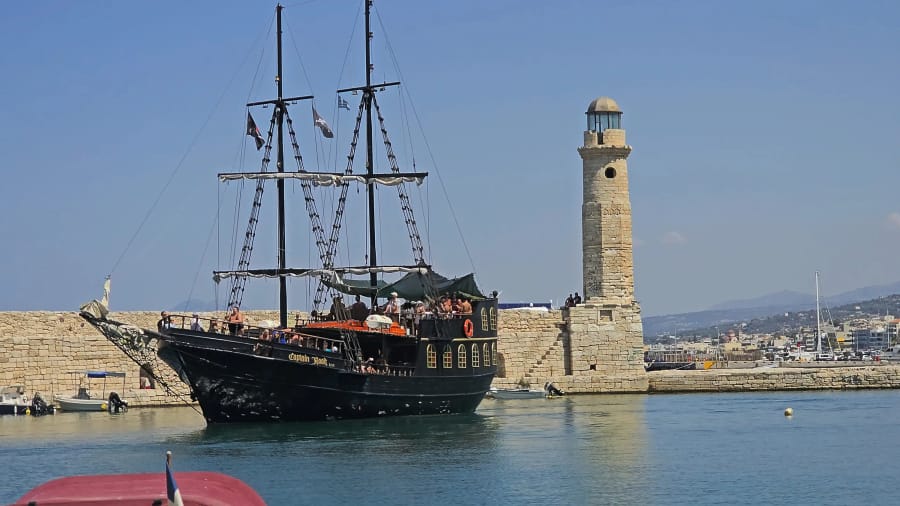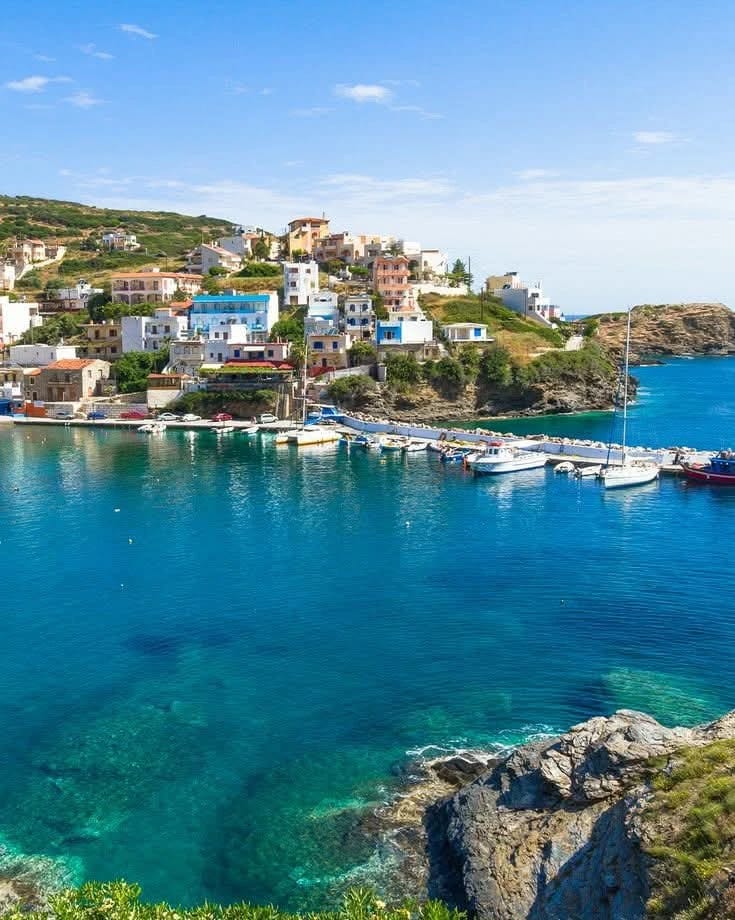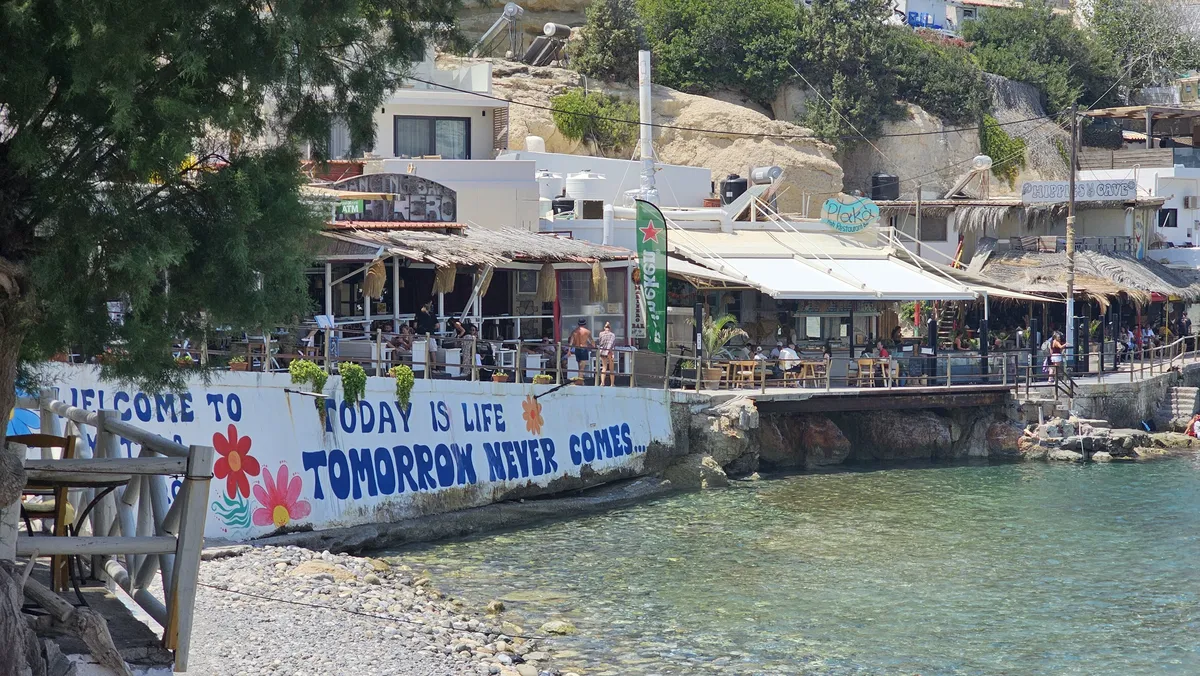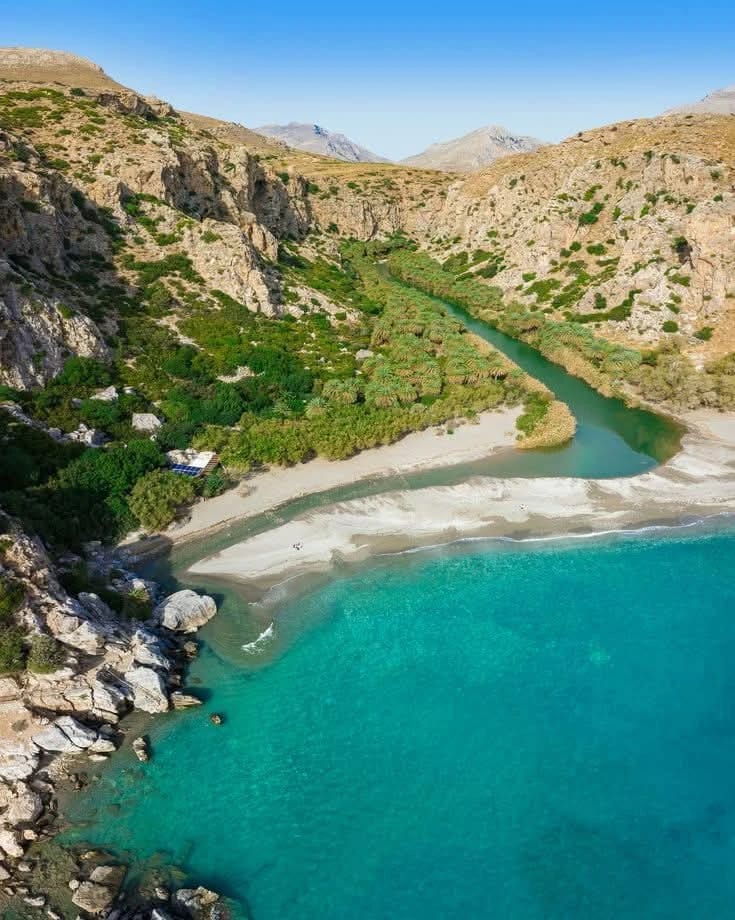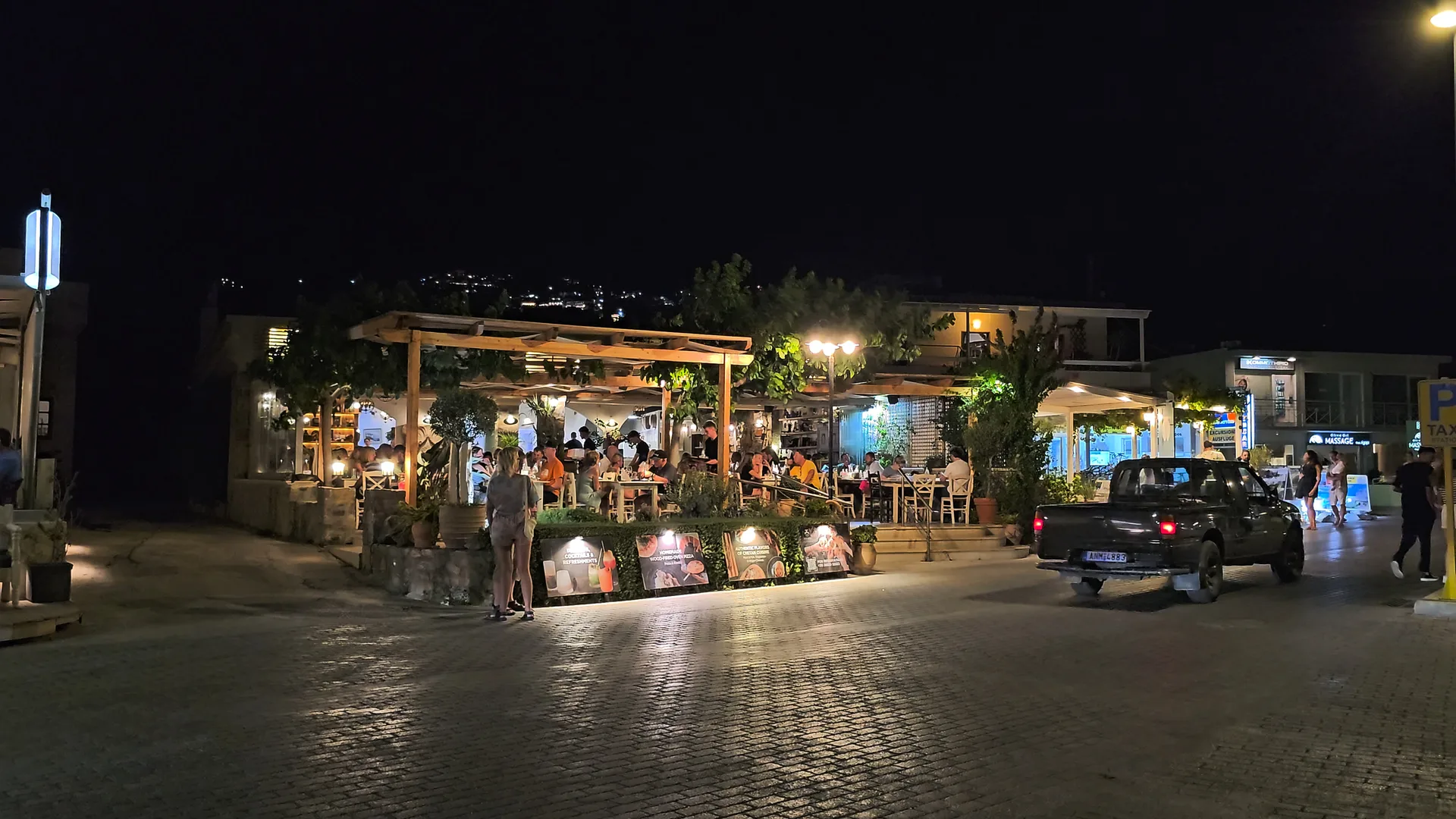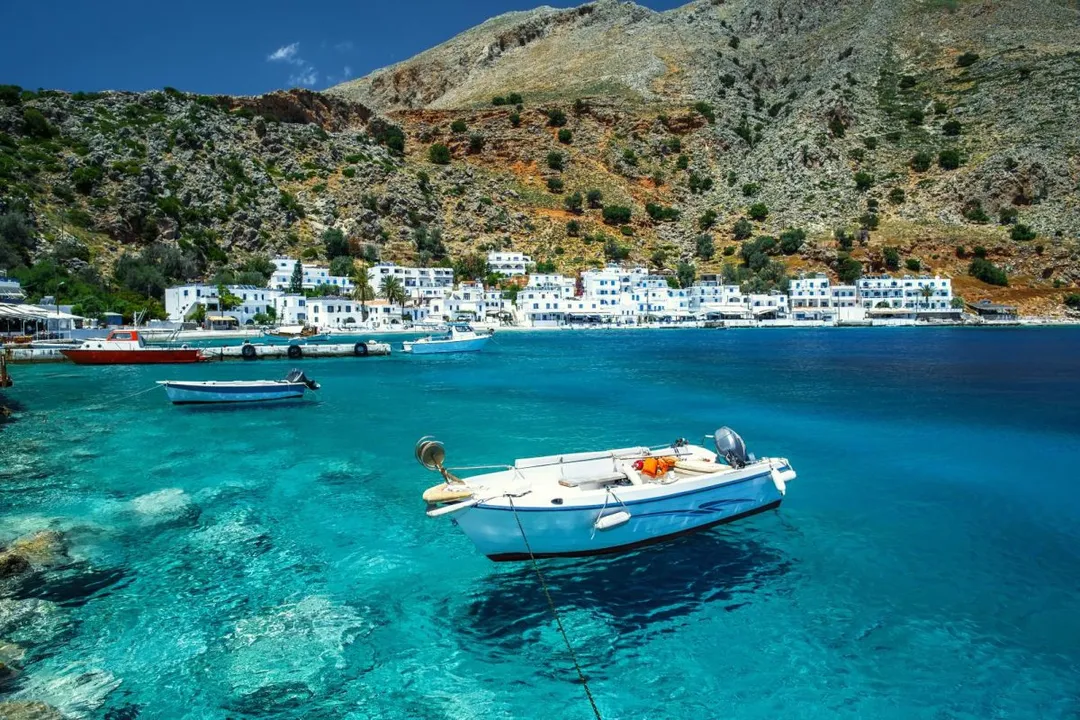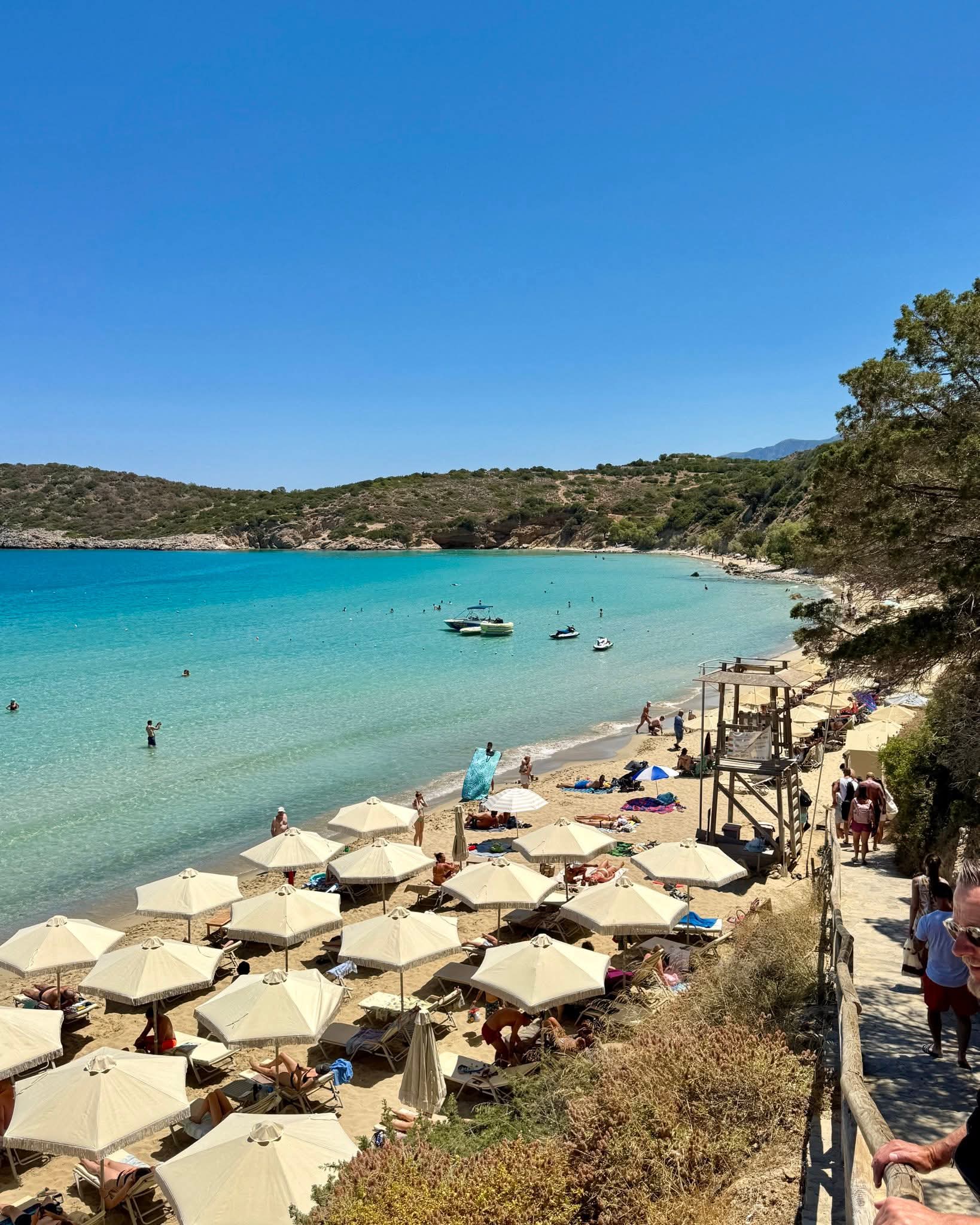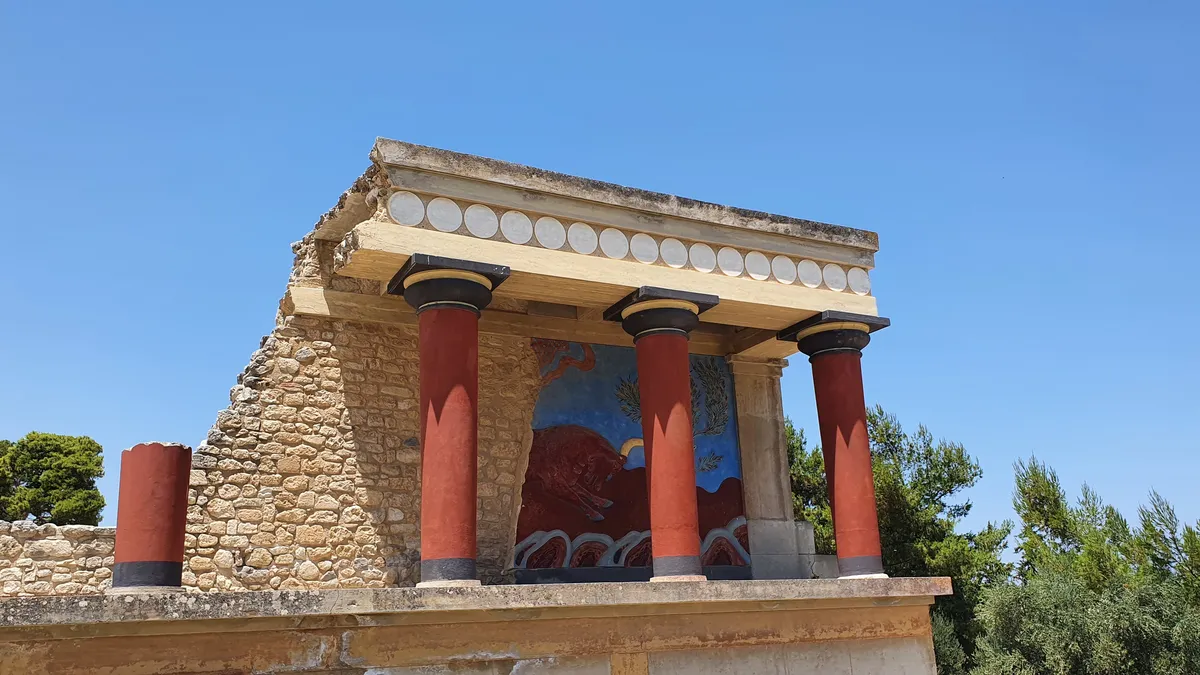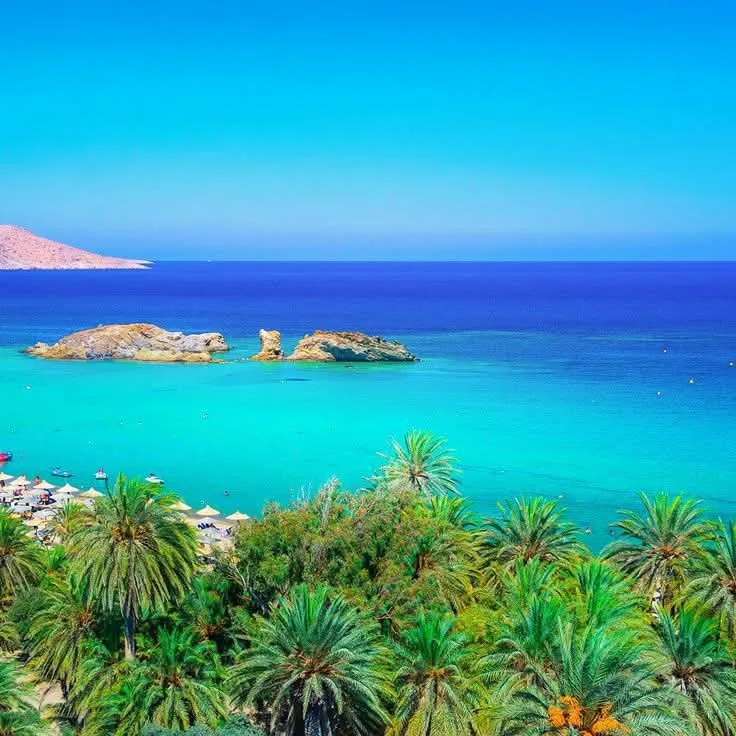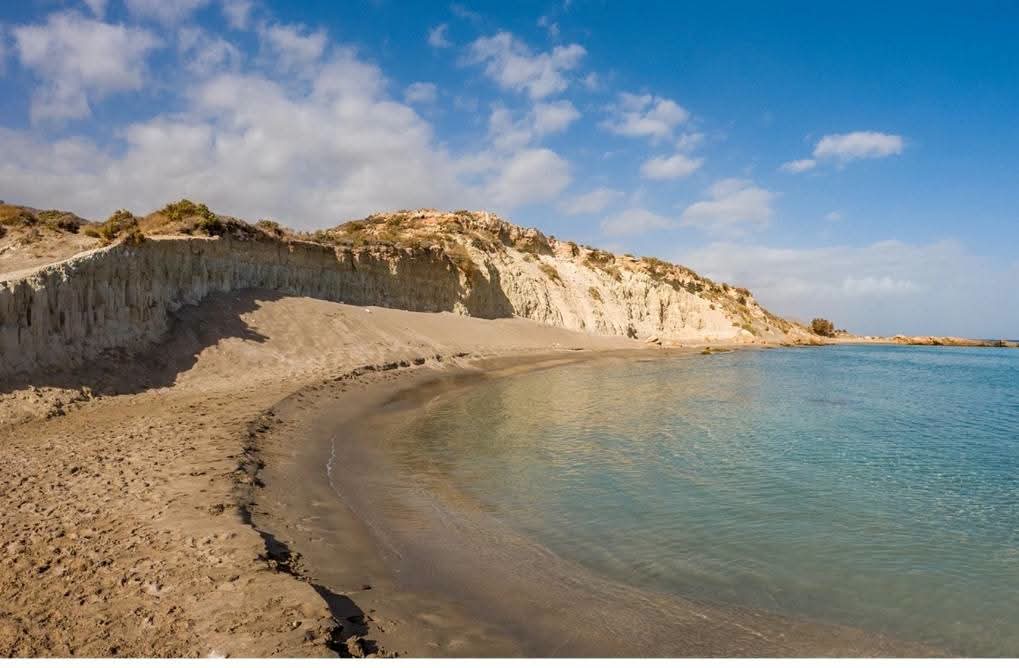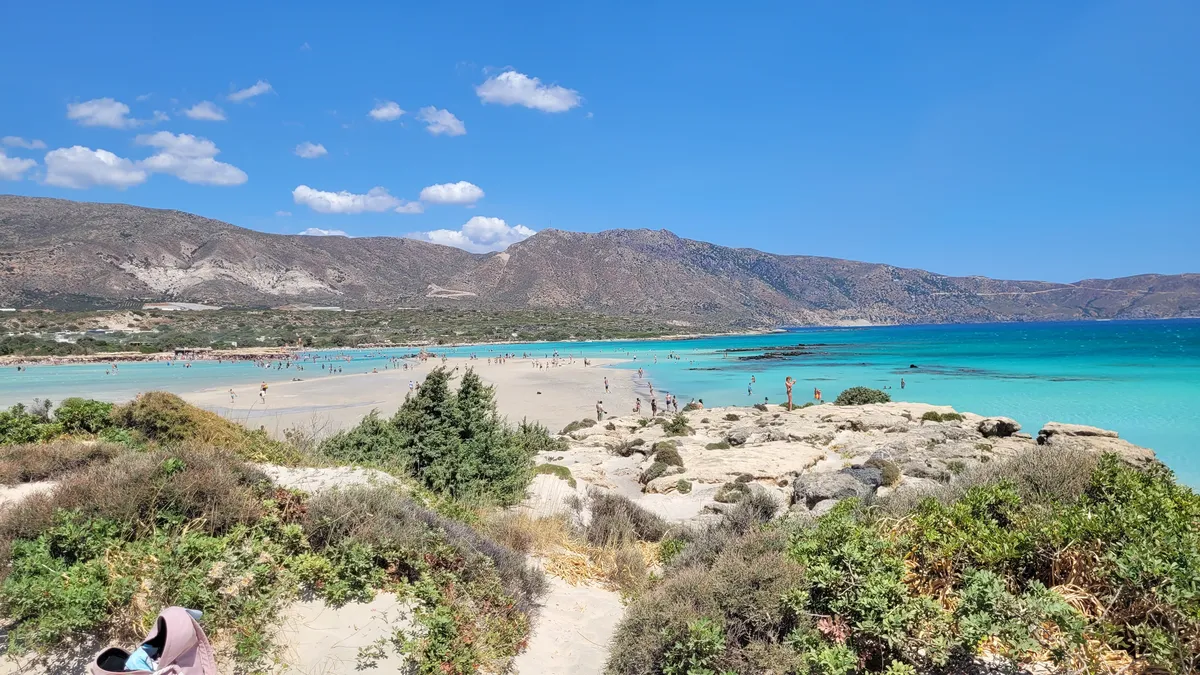
The sand isn't pink like in the photos. In the middle of the day, it's beige. Early in the morning, on the north side of the islet, the colour shifts — the shells and calcareous algae on the bottom give the water something unexpected. More subtle than expected, and more real.
What we understood on the ground
The islet is crossed on foot — the water comes up to mid-calf at the crossing. The pink hue is mainly visible in the water, not on the beach itself. The photos circulating online are taken early, in low light, from the north side. It's not a lie — it's a framing.
"It's pink under the water, not on top." — Mia, 12.
↓ Timings, access and parking — what changes depending on when you arrive.
The first thing that surprises you at Elafonissi beach is the water. Even under grey skies, it has that milky transparency that recalls a tropical lagoon. The lagoon is shallow — rarely more than a metre deep — and you can wade across to the islet of Elafonisi in under ten minutes. On the island, short trails follow low cliffs and quieter coves that the crowds rarely reach.
The pink sand, though, deserves some demystifying. It's there, but its intensity depends on the season, the light, and exactly where you lay your towel. In high summer, heavy foot traffic blends the coral sand with ordinary white sand. The colour is more pronounced toward the northern end of the island, in less-visited spots. The photos you've seen were probably taken early morning with a warm filter.
Elafonisi has been a protected nature reserve since 1992. In theory, activities are restricted: no jet-skis, no camping. In practice, summer brings overflowing car parks, beach vendors, and multi-kilometre traffic jams on the access road at weekends.
What few guides mention: Elafonisi is far more enjoyable in May or October. The water is warm, the beach is half-empty, and you can finally hear the wind in the tamarisk trees.
A few practicals worth knowing: entry to the beach is free, parking costs a few euros, and a set of two sunbeds with an umbrella runs about €10–15 for the day. Seasonal canteens cover drinks and snacks, but there's little natural shade — bring your own. And if the main beach feels overrun, walk twenty minutes south to Kedrodasos: a wilder, cedar-backed cove with no facilities and a fraction of the crowds.
My photos
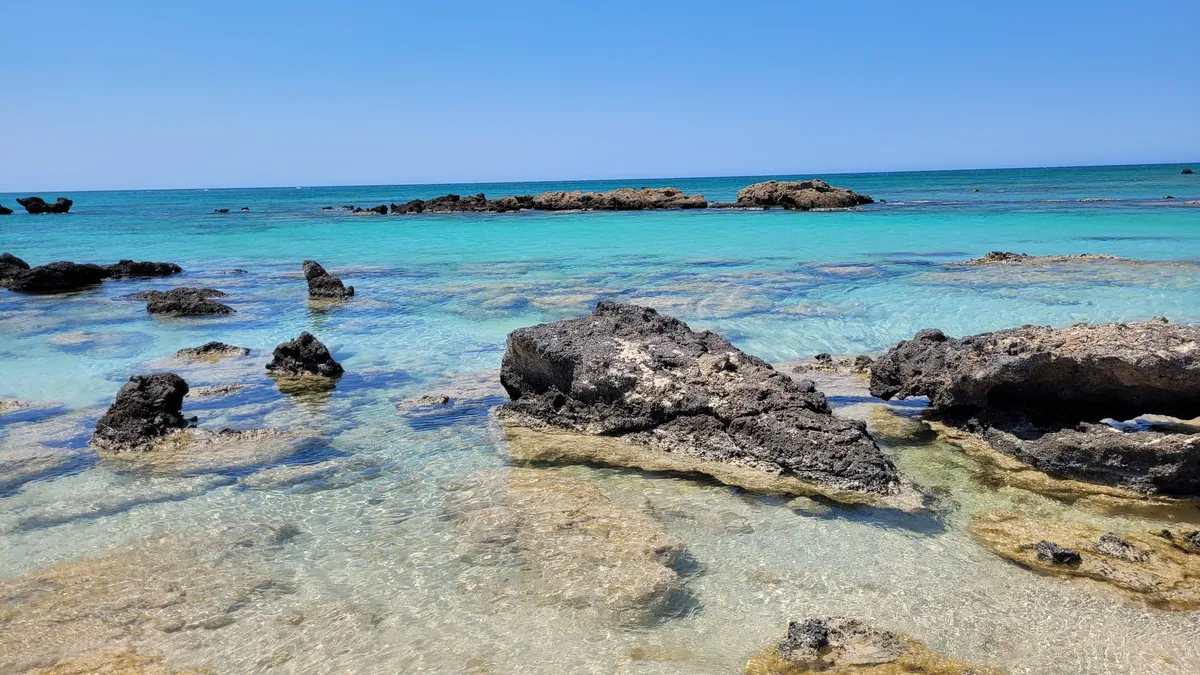
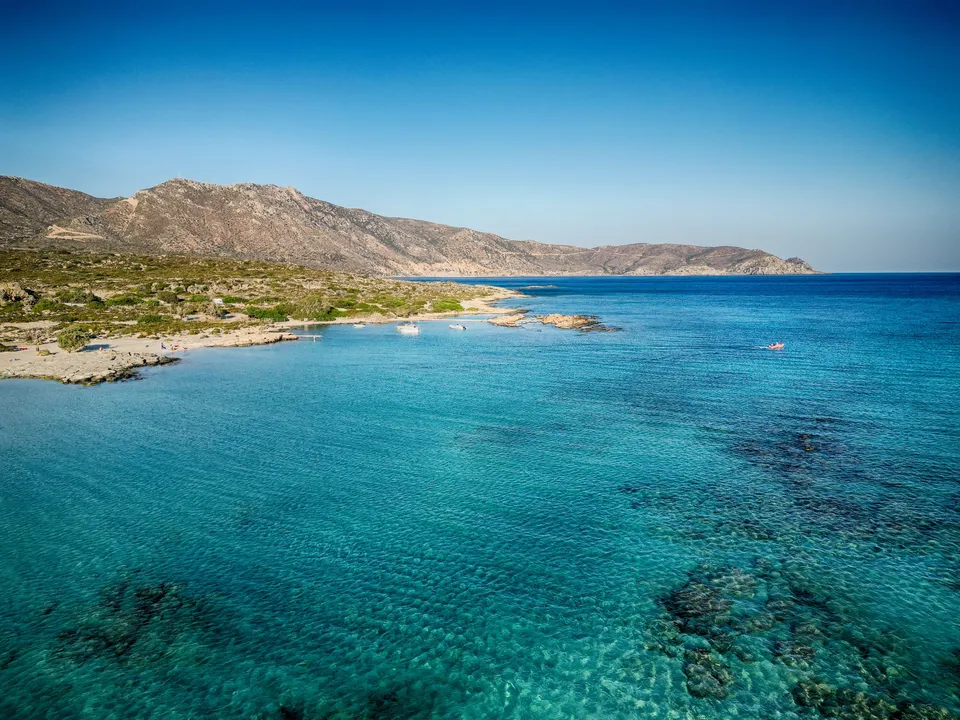
© Crète Immersion
What to know
- Shallow, warm water — ideal for children
- Easy access from Chania
- Small island to explore on foot
- Nature reserve: no motorised water sports
- Pink sand less pink than in photos
- Very crowded July–August
- Little natural shade
- Access road congested in high season
What nobody tells you
The pink tint comes from crushed shells — it shows in the morning and at the north of the island, before crowds mix the pink sand with the white. At midday in August, on the main beach, it's almost invisible.
Practical tip
With young children, this is Crete's best beach. Head to the northern side of the islet for the pinkest sand and relative quiet.
🔎 Sources & verification
Verified on site in August 2026. Transport and access linked to the official source. Our method.
📍 Where is Elafonisi Beach (Elafonissi)
Elafonisi Beach (Elafonissi) caught your eye?
Build an itinerary that gives it a real place — with the spots that suit you.
Plan my trip →