The wine of Crete: grapes and estates
Europe's oldest wine tradition is making a spectacular comeback. Here are the grapes that exist only here, the four PDOs, and five real estates to visit — with their official websites.
The grapes you'll find nowhere else
Vidiano
WhiteThe star white, nicknamed “the Cretan Viognier”. Round, full, with peach and apricot aromas; it can age. Long forgotten, it's now the island's pride — the grape to taste first.
Vilana
WhiteThe everyday white, the most planted. Fresh, light, floral and lemony — the backbone of the Peza PDO. The honest carafe wine you drink chilled at a taverna table, without thinking.
Dafni
WhiteThe resurrected one. Saved from extinction by the Lyrarakis estate, it carries notes of bay laurel (dafni in Greek) and herbs — an aromatic white found nowhere else on earth.
Liatiko
RedThe star red, very ancient. Pale in colour, all finesse — likened to a cross of Pinot Noir and Nebbiolo. It gives both elegant dry reds and the legendary sweet wine of the Dafnes PDO.
Kotsifali
RedThe red that brings the body. High in alcohol and spice, but low in colour — which is why it's almost always blended with Mandilari. Together they make the fleshy reds of the Archanes and Peza PDOs.
Mandilari
RedThe red of colour and tannin. Powerful, tannic, deeply coloured — the exact complement to Kotsifali. On its own it's austere; in a blend it gives structure and ageing potential. Also spelled Mandilaria.
The 4 appellations (PDO)
Dafnes
Liatiko
dry & sweet red
Archanes
Kotsifali · Mandilari
red blend
Peza
Vilana · Kotsifali
white & red
Sitia
Vilana · Liatiko
east of the island
Above them, the Crete PGI (ΠΓΕ Κρήτη) covers the whole island and allows free blending of indigenous and international grapes.
Five estates to visit, east to west
All bottle their own wine and welcome visitors (often by appointment). Click to book directly on their official site.
Douloufakis
Dafnes · HeraklionOfficial site ↗Three generations since 1930, at the heart of the Dafnes PDO. A benchmark for Liatiko and Vidiano; weekday visits by appointment.
Lyrarakis
Alagni · HeraklionOfficial site ↗Since 1966, the rescuers of forgotten grapes: they're the ones who brought back Dafni, Plyto and Melissaki. The essential estate for grasping Cretan identity.
Diamantakis
Kato Asites · HeraklionOfficial site ↗A family estate that has moved upmarket, one of the finest ambassadors of modern Vidiano. A warm welcome at the foot of Mount Psiloritis.
Manousakis (Nostos)
Vatolakkos · ChaniaOfficial site ↗The big name of the west, farmed organically. Rhône grapes (Syrah, Grenache, Mourvèdre, Roussanne) married to Cretan Vidiano. A lovely terrace-taverna to taste facing the vines.
Dourakis
Alikampos · Apokoronas · ChaniaOfficial site ↗A family estate in the Apokoronas hills, between Chania and Rethymno. A cellar tucked in greenery, generous tastings — the ideal stop on the western route.
To map your wine route: Wines of Crete (official network) ↗
Europe's oldest wine tradition is living a renaissance
Grapes were already being pressed in Crete in Minoan times: the wine press at Vathypetro, near Archanes, is nearly 3,500 years old. But for decades Crete sold off nameless bulk wine. The turning point came in the 2000s: a generation of winemakers trained in France and Italy came home, tore out the international grapes to replant the indigenous ones, and revived varieties thought lost. The result: Vidiano whites and Liatiko reds with no equivalent anywhere — because these grapes grow nowhere else.
How to taste Cretan — and what they won't tell you
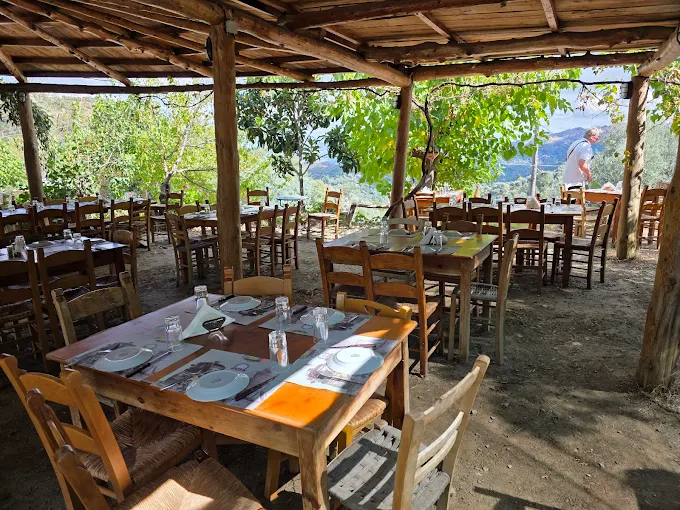
Most of the estates listed here open a tasting room from April to October, often by reservation (reckon €15–30 for a guided tasting). The official “Wines of Crete” network maps the wine routes and the cellars that welcome visitors — the place to start. An insider truth: in village tavernas the carafe “house wine” is sometimes superb… and sometimes oxidised. Raki, on the other hand, is offered free and homemade — but it isn't wine: it's a grape-marc spirit. For good Cretan wine, aim for a cellar that bottles, or a taverna showing estate labels. Don't leave without tasting a sweet Liatiko: it's the island's hidden treasure.
Frequently asked questions
Which Cretan wine should I taste first?
In white, a Vidiano: round, fruity (peach, apricot), it's the flagship grape and the most revealing of the island. In red, a dry Liatiko for finesse, or — the hidden treasure — a sweet Liatiko from the Dafnes PDO, a dessert wine of rare elegance.
Can you visit vineyards in Crete and taste?
Yes. The Heraklion region (Peza, Dafnes, Archanes) holds most of the estates, 20–40 min from the city: Douloufakis, Lyrarakis, Diamantakis. In the west, near Chania, Manousakis (organic) and Dourakis are worth the detour. Most open April to October, often by reservation (€15–30 per tasting).
What's the difference between Cretan wine and raki?
Raki (or tsikoudia) isn't wine: it's a spirit distilled from grape marc, around 40% ABV, offered at the end of a meal. Cretan wine is drunk at the table. Don't judge the island's wines on a taverna's carafe of “house wine”, sometimes oxidised: go to a cellar.
Do Cretan wines age?
The best ones, yes. An estate Vidiano can age a few years, and the Kotsifali–Mandilari red blends, like some Liatiko, gain complexity. But most of the production is made to be drunk young, on fruit and freshness — which is perfect when travelling.
Wine is half the Cretan table
Discover the other half: what people really eat here, why they live long, and how to eat Cretan without falling into the tourist traps.
Read the Cretan diet →Plan
Getting around
Explore
Beaches
Best beaches›Voulisma (Golden Beach)›Secret beaches›Balos or Elafonissi?›Falasarna›Seitan Limania›Nature & adventure
Samaria Gorge›Gorges & waterfalls›Things to do›Excursions: worth it?›Activities & tours›Boat cruises›Santorini day trip›Culture & history
Knossos (tickets)›Spinalonga›Lato (Dorian city)›Gournia (Minoan town)›Battle of Crete›Authentic villages›Essentials