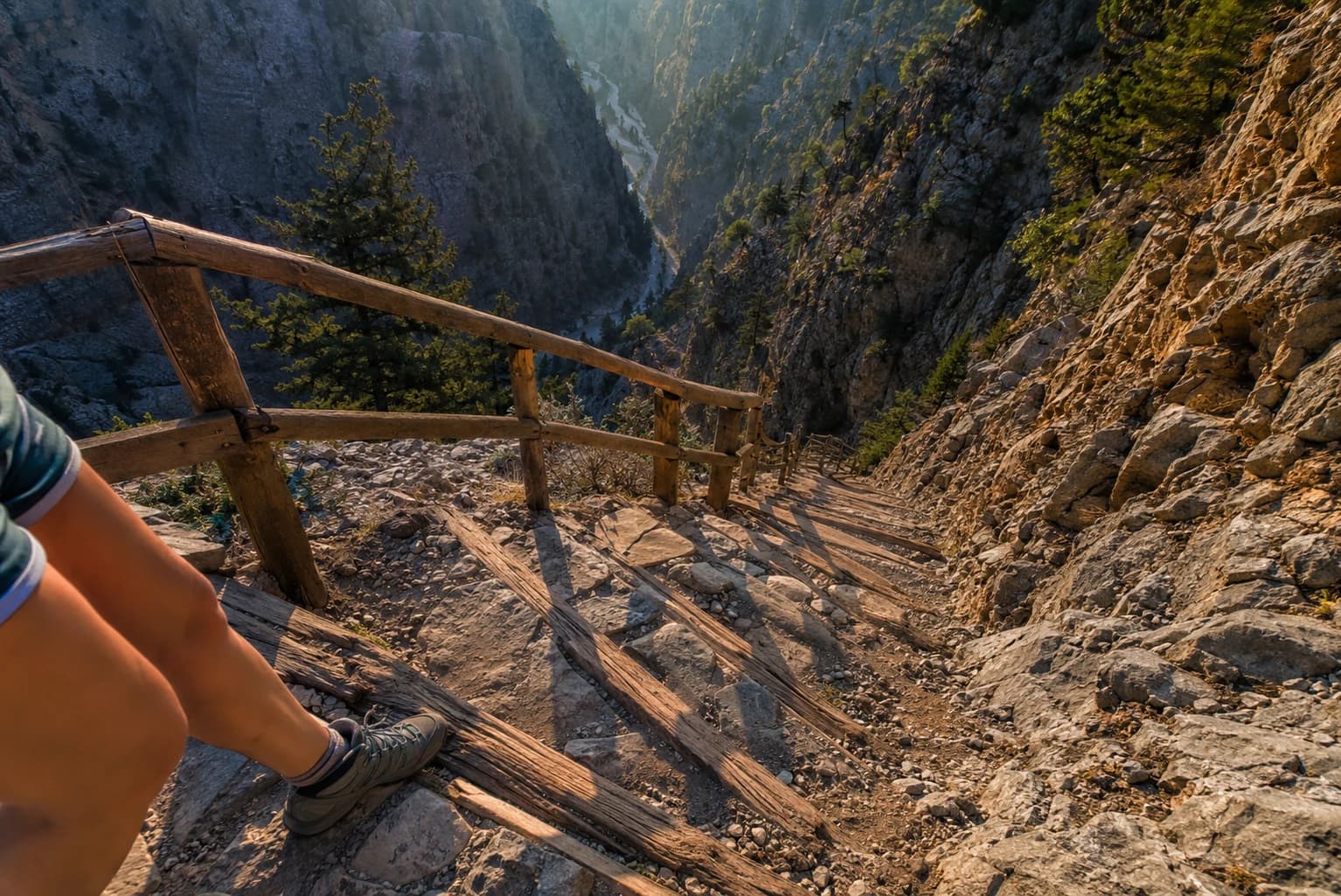
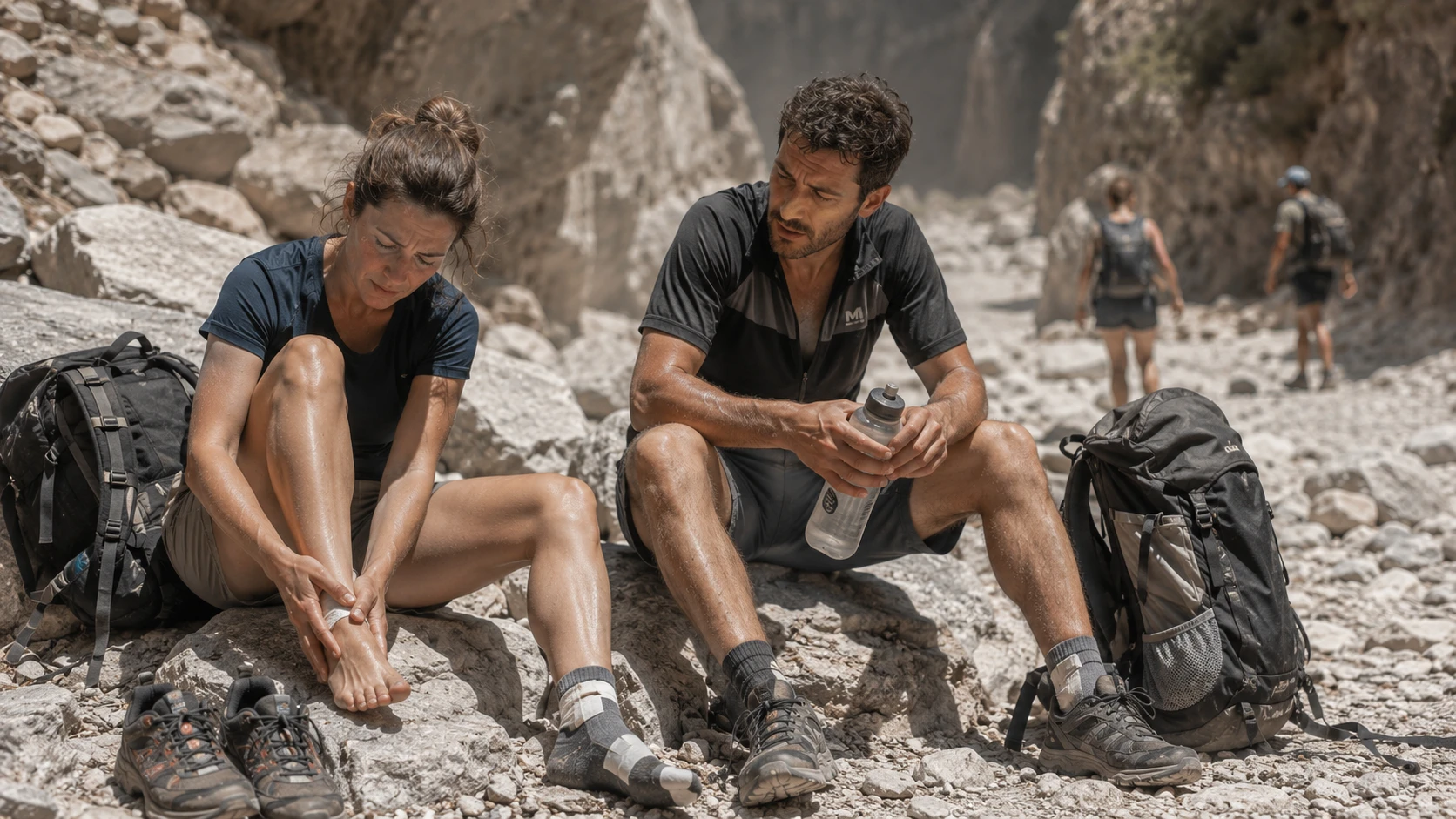
Samaria Gorge is the most famous hike in Greece and probably the least well prepared for. Every summer, thousands of tourists tackle 16 kilometres of raw rock descent — in city sneakers, without poles, without knowing that there is no road at the bottom. The result: burst blisters by kilometre 8, wrecked knees on arrival at Agia Roumeli, and an exhausting ferry wait in the shadowless heat.
The problem isn't the mountain. It's the hellish return bus, the 45-minute ferry, and a circuit organisation that turns a hike into a logistical odyssey. This guide sorts all of that before you set foot on the trail.
Is it really that hard? The honest verdict
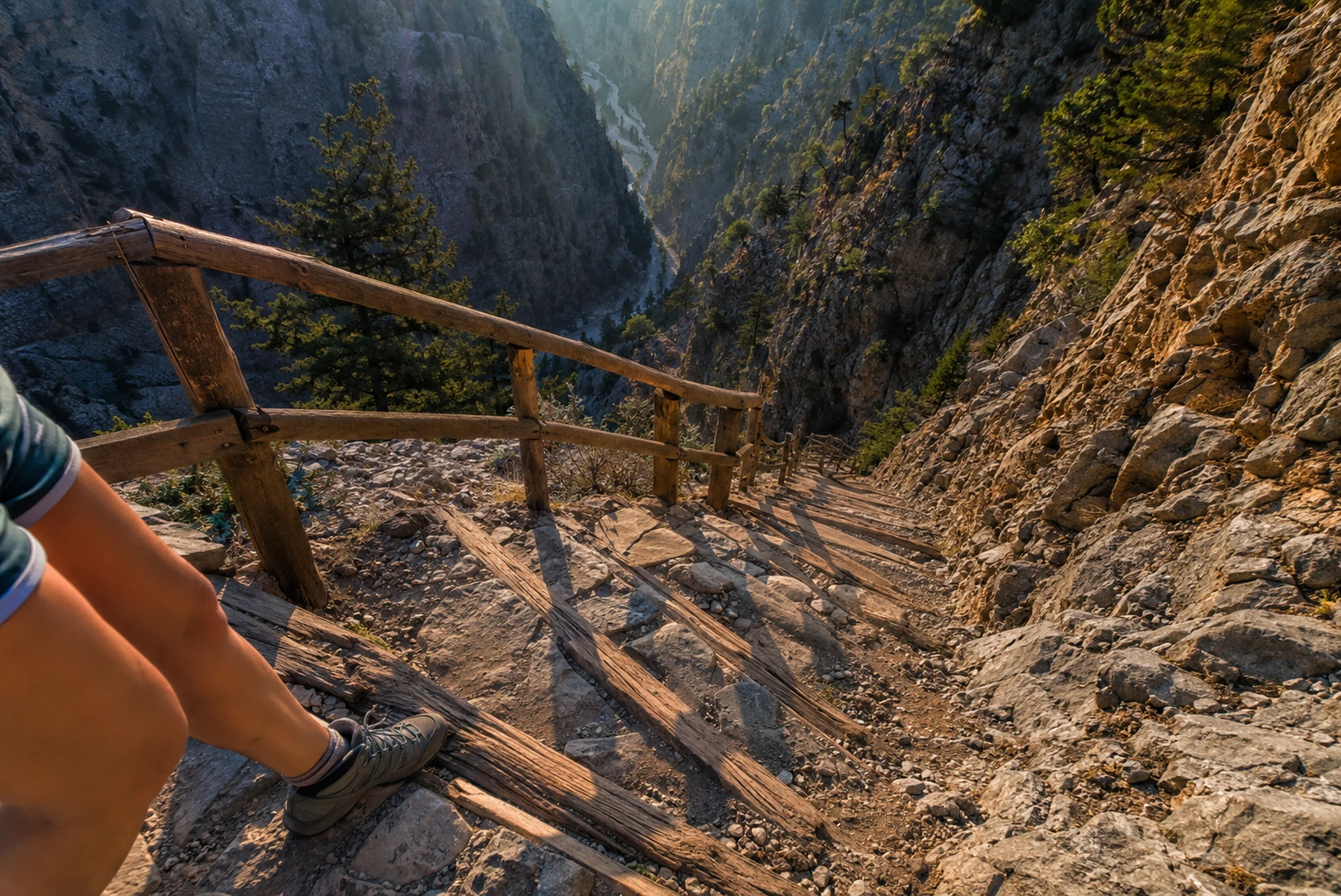
Samaria's reputation is exaggerated in both directions. It's not Everest: there's no real altitude to manage, no high-mountain night, no specialist gear. But it's not a family stroll either. It's a long descent, monotonous in its final kilometres, physically exhausting on a specific type of terrain.
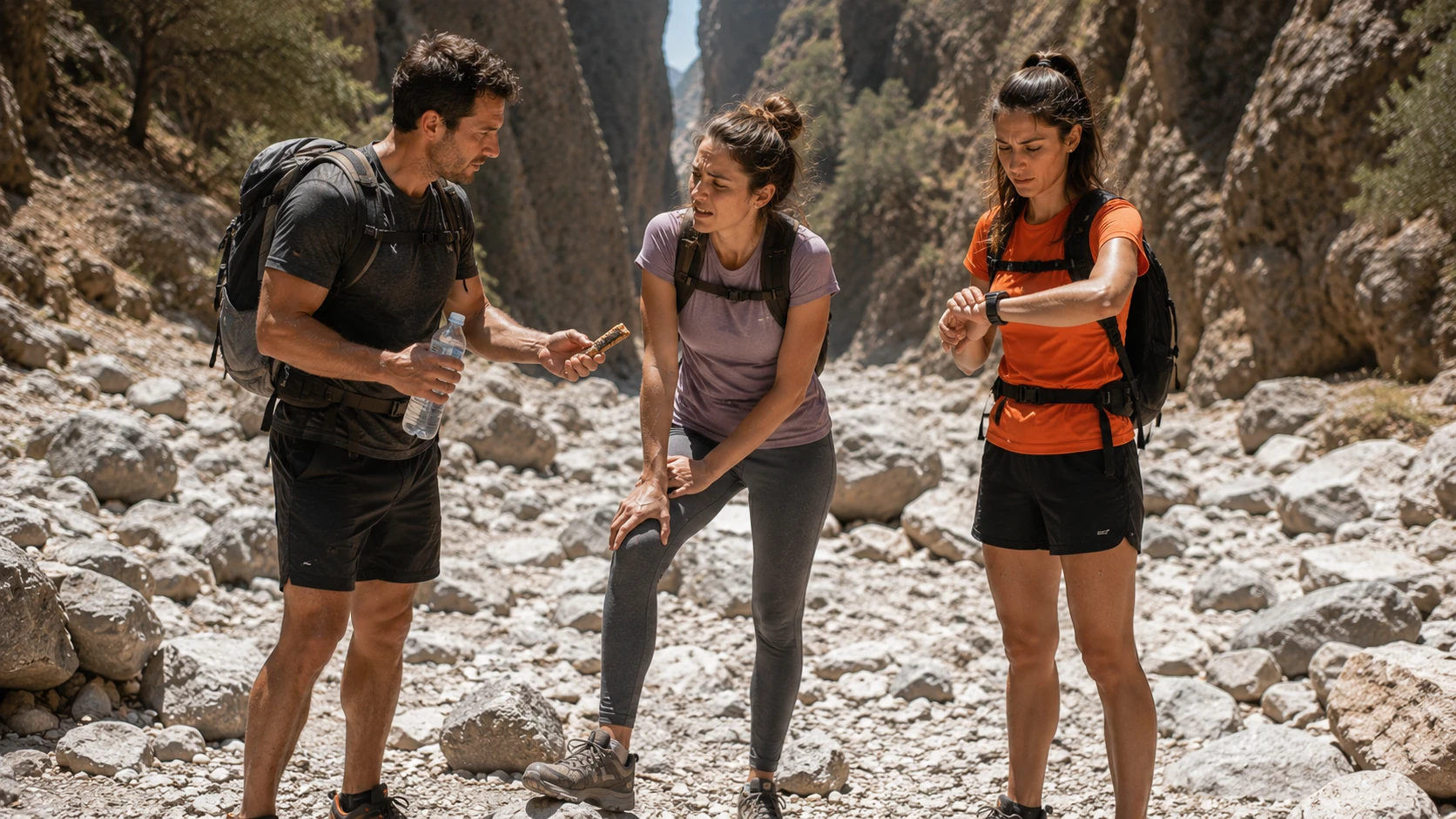
The real problem — the one no tourist guide mentions — is impact. 16 km of descent over rock, gravel and stones: it's a machine designed to destroy knees and ankles. The quadriceps work eccentrically for hours. From kilometre 10 onwards, the pain no longer comes from the feet but from inside the knees. If you have a joint history (meniscus, mild osteoarthritis, an old sprain), prepare seriously or choose Imbros.
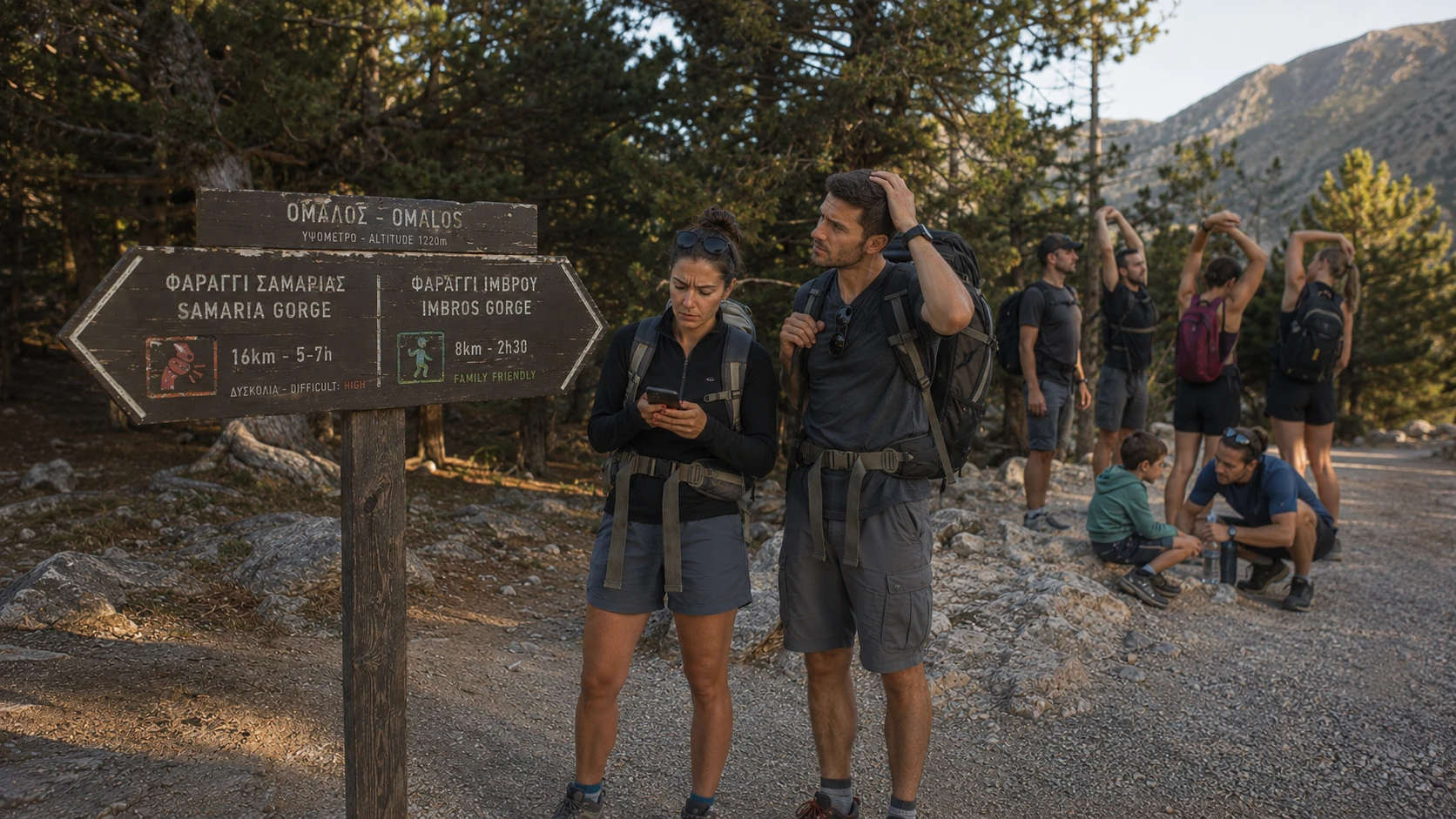
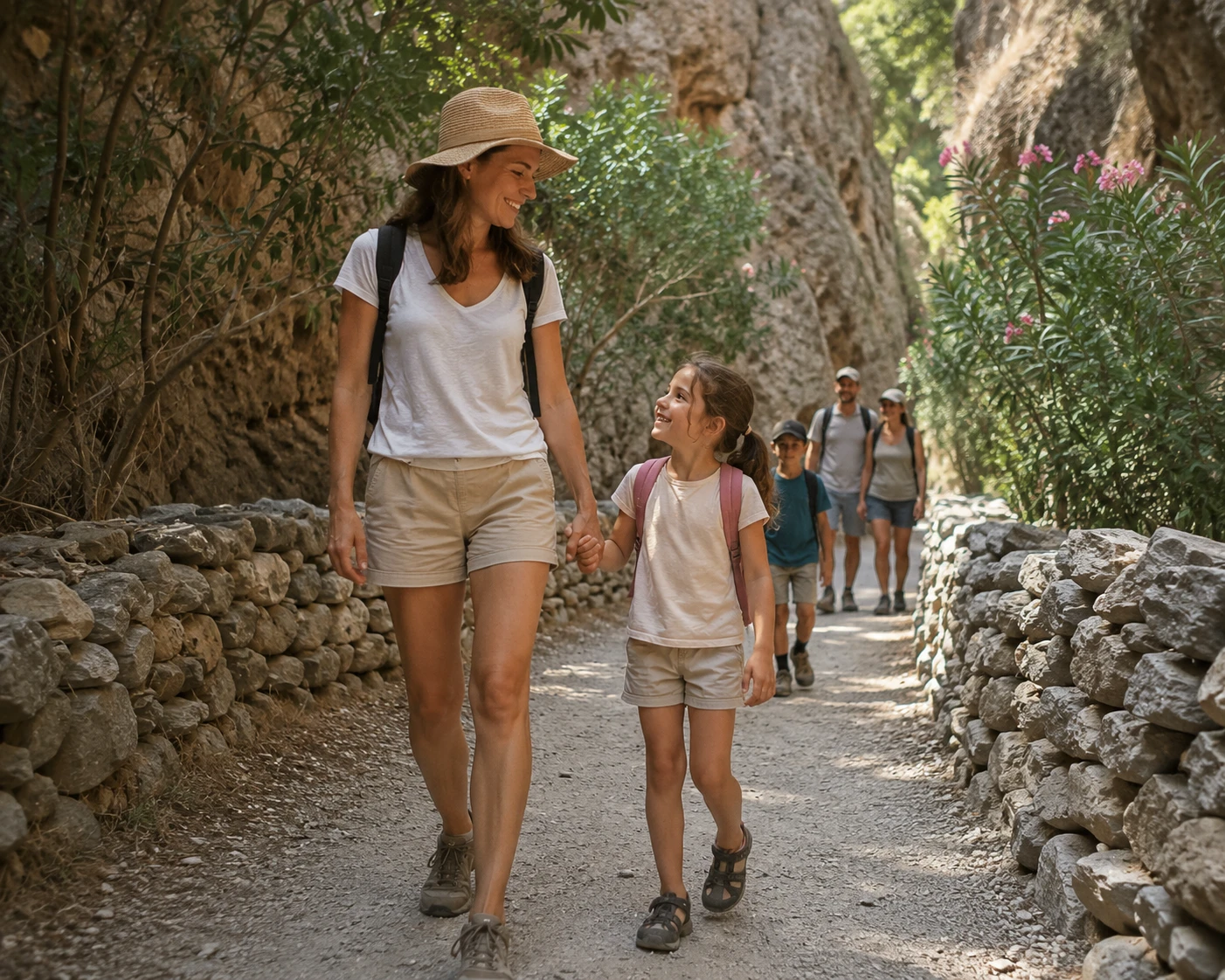
Imbros is the massively underrated alternative. 8 km versus 16, 2h30 of walking versus 6 to 7h, 700m negative elevation versus 1,200m, no mandatory ferry on return. The trail is more varied, the gorge wilder in its upper section. If you have children under 10, if someone in the group has fragile knees, or if you have any doubts: do Imbros. It's objectively the wiser call.
End-of-the-world logistics (the real challenge)
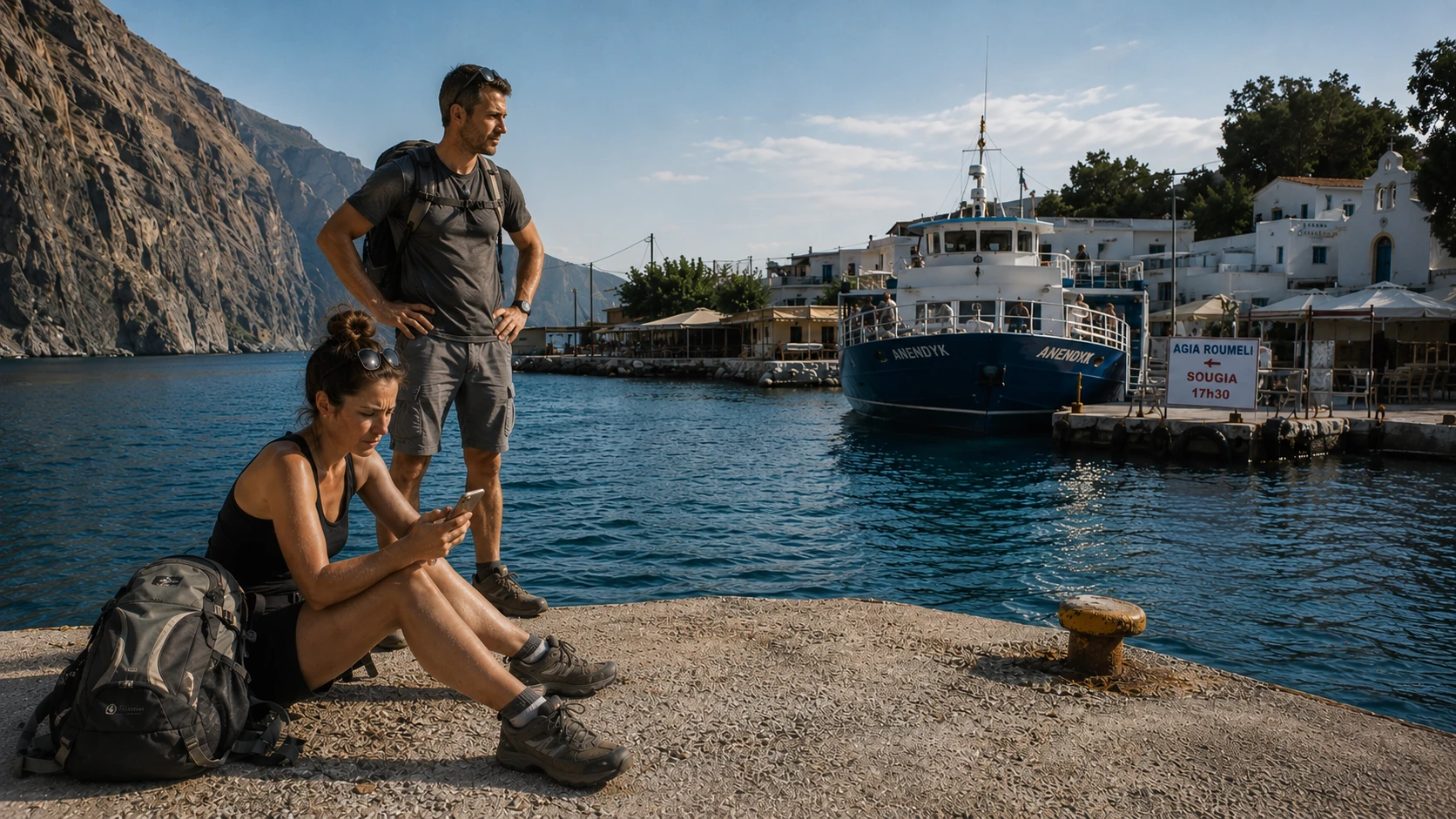
Here's the puzzle nobody explains to you before you leave. You start at Omalos (1,200m altitude, north side). You descend 16 km. You arrive at Agia Roumeli — a village of 120 inhabitants accessible only by sea or on foot. There is no road. Your car is at Omalos. You are exhausted.
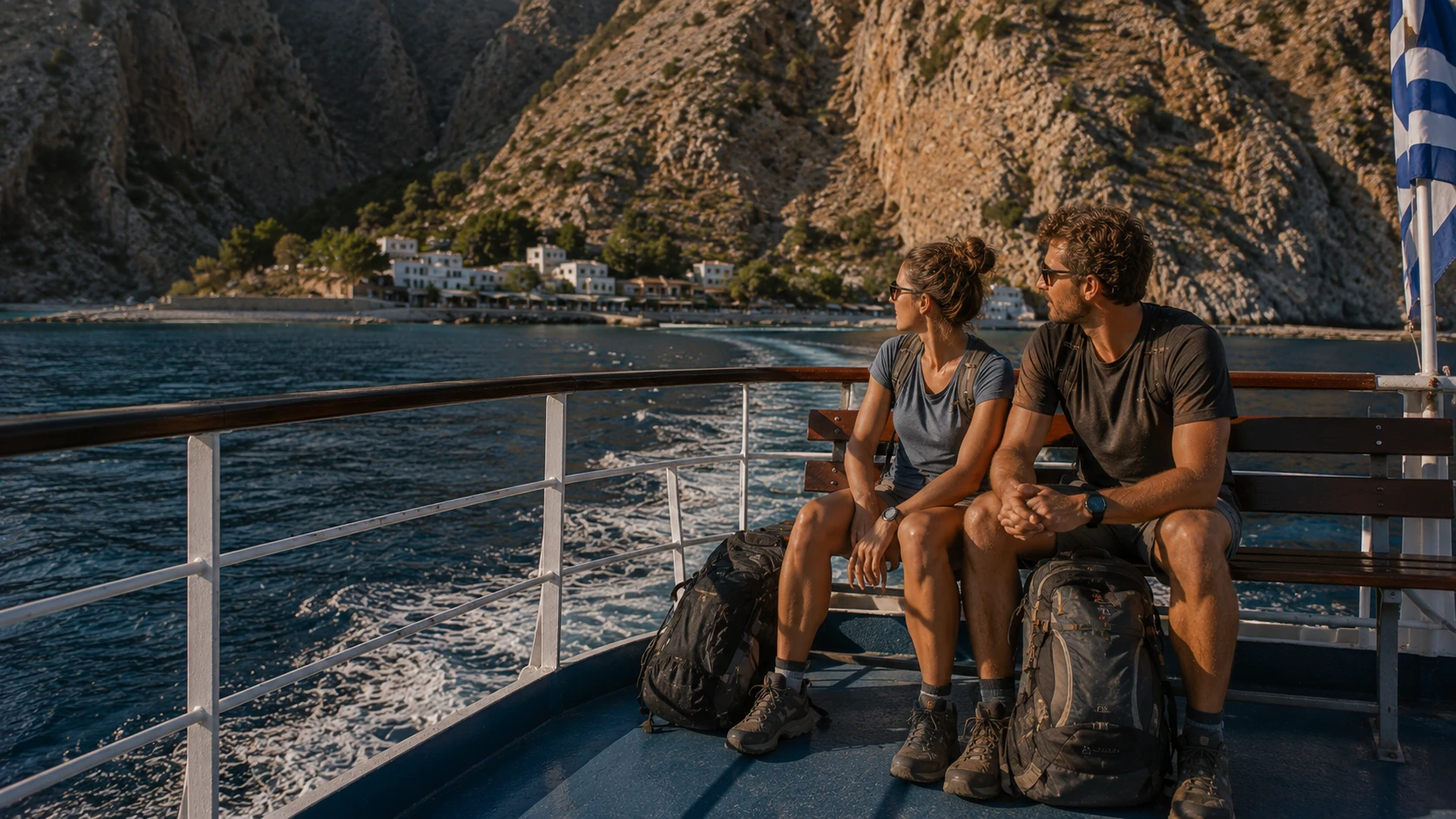
To get back, here is the mandatory circuit: 1) Wait for the Anendyk ferry — departures at 15:30 and 18:00 in high season, weather permitting. 2) Crossing to Sougia (45 min) or Sfakia / Chora Sfakion (1h20). 3) KTEL bus from Sfakia to Chania (1h15). 4) Taxi or bus from Chania to Omalos to collect your car. Allow 5 to 7 hours of transport after the hike. On windy days, the ferry may not sail.
The smart solution: a private transfer. A driver drops you at Omalos at dawn and picks you up at Sfakia or Sougia in the evening. You can sleep in the vehicle. This service exists and costs between €80 and €130 for 4 people — less than €25 per head to eliminate all logistical stress. Not a luxury. Mental hygiene.
The gear and timing protocol
Departure from Omalos: 6:30am at the latest. Not 8am. Not 9am. 6:30am. The reason is physical: the gorge is shaded between 6am and 9am thanks to the 600-metre cliffs. By 10am, the sun clears the walls and the temperature rises 8 to 12°C in 30 minutes. Leaving at 6:30 lets you cover the steepest section — the first 4 kilometres — in cool air and without the 2,000 other hikers arriving on the same bus timetables.
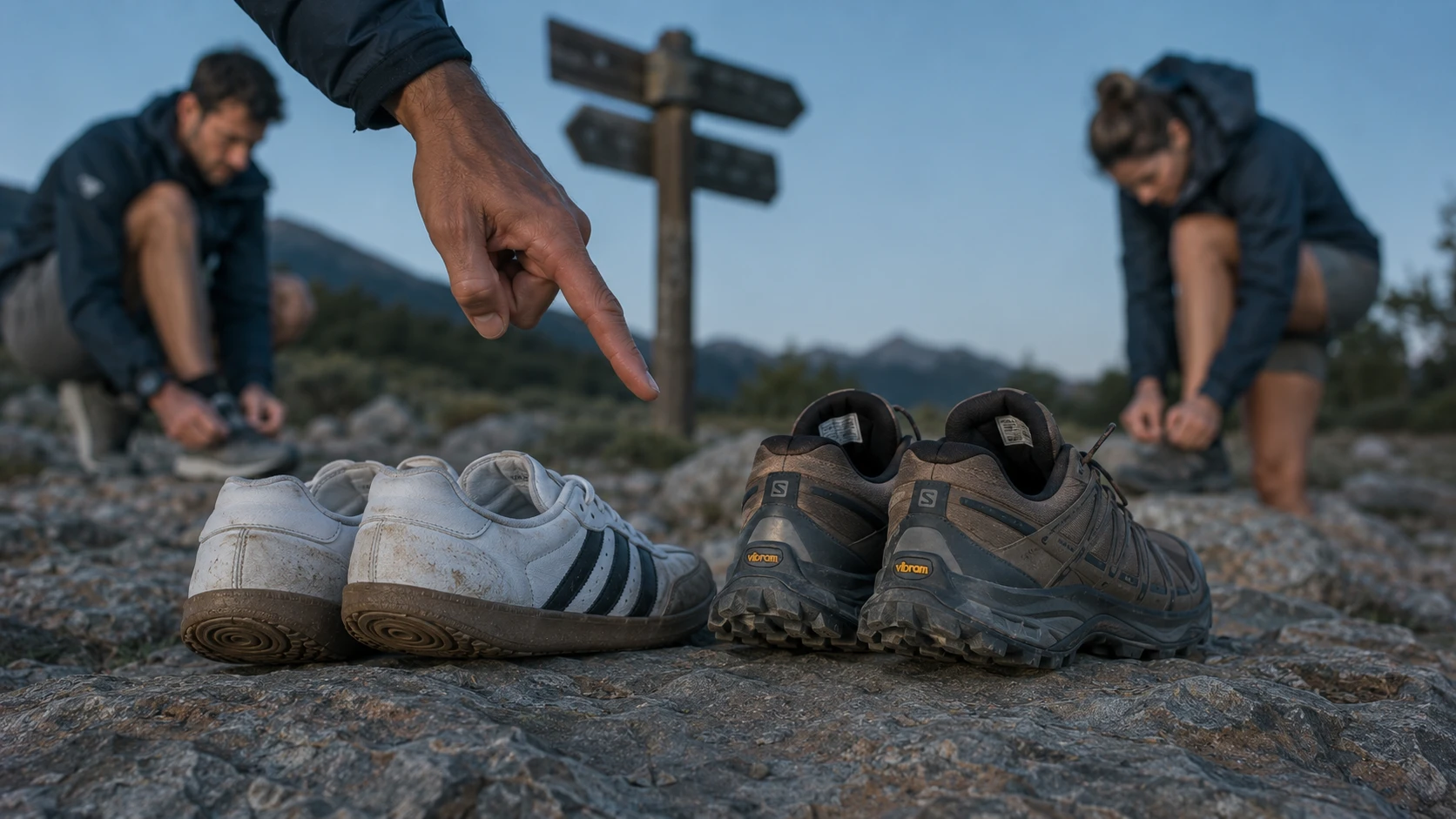
Absolutely forbidden: smooth-soled trainers — Stan Smiths, lifestyle New Balance, city sneakers, lightweight sandals without grip. The rock is unstable, wet in places, sometimes coated in a thin slippery clay film. You need trail or light hiking shoes with Vibram or Contagrip soles. No need for heavy mountain boots — but a lugged sole is non-negotiable.
The rest of the essential kit: 2 litres of water minimum per person (fountains available in the gorge, but don't rely on them after July). Trekking poles — they reduce knee load by 30 to 40% on long descents. Hat essential in the lower section. Two pairs of socks — the change at kilometre 8, in the village of Samaria, saves feet. Ibuprofen in the bag: not for the trail, for the ferry.
🎒 Recommended gear
Salomon Speedcross, Hoka Speedgoat, Merrell Moab. Requirements: Vibram or Contagrip sole, ≤8mm drop, mid or low ankle. Budget €90–150.
Find Vibram trail shoes for Samaria →Frequently asked questions
Can you do the Samaria Gorge without a car?
With difficulty independently. There is a KTEL bus from Chania to Omalos (departure around 6:15am, ~1 hour, ~€3). But the return is problematic without a car. The optimal solution: a private transfer — a driver drops you at Omalos and picks you up at Sfakia in the evening.
When is the Samaria Gorge open?
The national park is officially open from mid-April to late October. Exact dates depend on weather: the gorge can close for several days in May if water levels are too high. Check with the Chania tourist office in the week of your hike.
How long does the Samaria Gorge hike take?
Between 4 and 7 hours depending on pace and trail traffic. The average is 5h30. Add 2 to 3 hours for the ferry, then 1h15 of bus from Sfakia. Plan a full day — a minimum of 10 to 12 hours door to door.
Can you do the Samaria Gorge with children?
Minimum recommended age: 8 for a sporty, walking-experienced child. Under 8, choose the Imbros Gorge (8 km, 2h30, no mandatory ferry). The 'Iron Gates' — the 3-metre narrow passage — are at kilometre 12: a tired child won't make it that far.
What's the difference between Samaria Gorge and Imbros Gorge?
Samaria: 16 km, 6 to 7 hours, 1,200m elevation, mandatory ferry, possible closure in bad weather. Imbros: 8 km, 2h30, 700m elevation, car return possible, never closed. Imbros is shorter but often wilder in its upper section. It's ideal for families, beginners, or when the weather is uncertain.