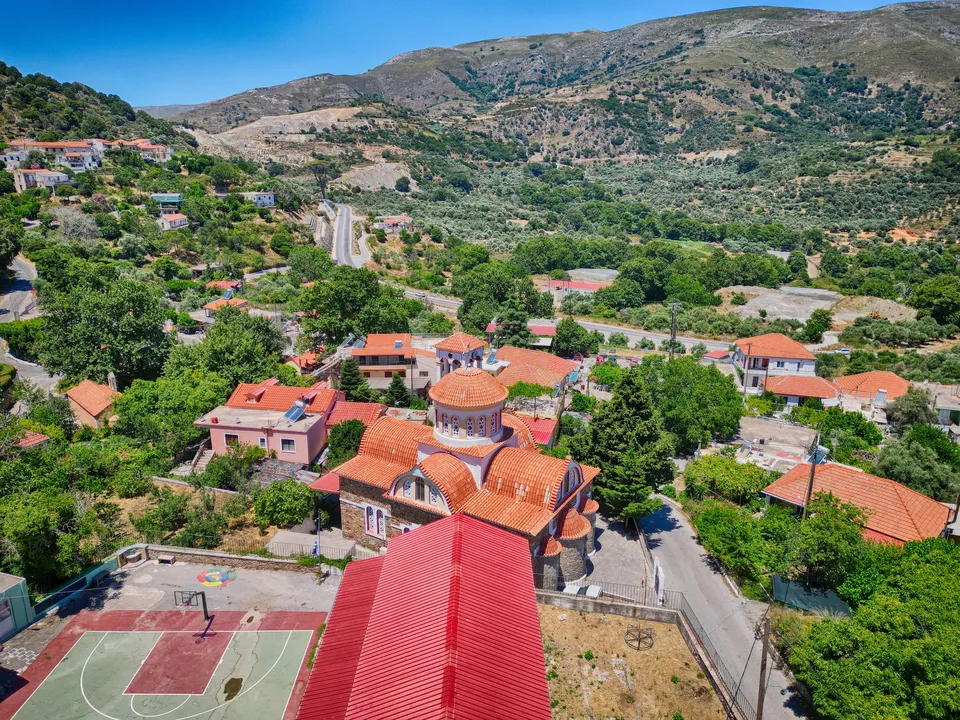
The authentic villages of Crete
Beneath the beaches lies a truer island: the mountain villages, where they still weave wool, play the lyra, make wine and roast lamb as they did a century ago. Here are six gems, west to east.
Six villages, six characters
Argyroupoli
Rethymno (west) · 260 mBuilt on ancient Lappa, the lower village hides a surreal scene: dozens of springs gush beneath huge plane trees, and water runs everywhere — between the taverna tables, through a chapel where it crosses the rock. A cool haven even in August, and one of Crete's loveliest lunch stops.
Full guide →Margarites
Rethymno (west) · 300 mSince Byzantine times, Margarites has shaped clay. Its flower-filled lanes line up ceramicists' workshops that still throw the Cretan pithos — the great oil-and-wine jar. Buy a piece straight from the potter, watch the traditional kiln, and take a coffee overlooking the valley. Pair it with nearby Arkadi Monastery.
Full guide →Anogia
Psiloritis (centre) · 740 mPerched high on Mount Psiloritis, Anogia is Crete's proudest village: home of the lyra and its great musician families (Xylouris, Skoulas), of wool weavers, and of fierce resistance — the village was razed by the Nazis in 1944 and rebuilt stone by stone. Here you eat antikristo (lamb roasted on a vertical spit) in shepherds' tavernas. Rugged, real, unforgettable.
Full guide →Archanes
Heraklion (centre) · 380 mCrete's most polished village: neoclassical houses in ochre and pink, immaculate cobbled lanes, gastronomic terraces. Awarded for its restoration and quality of life, Archanes is the heart of a major wine appellation (Kotsifali, Mandilari). Fifteen minutes from Knossos and the Minoan wine press of Vathypetro: the ideal culture-and-wine pairing from Heraklion.
Full guide →Kritsa
Lasithi (east) · 375 mOne of the east's oldest and most photogenic villages: a staircase of white houses clinging to the mountain above Agios Nikolaos. You come for the church of Panagia Kera, which holds Crete's finest Byzantine frescoes, and for the hand-woven textiles hung in the lanes. Nearby, the ancient Dorian city of Lato commands the valley.
Full guide →Mochlos
Sitia (east) · seasideThe end of the world, gentle version: a handful of houses and fish tavernas set right at the water's edge, facing an islet you can swim to — the ancient Minoan settlement of Mochlos. Here you set your chair in the ripples, pick the catch of the day, and time stops. One of Crete's last truly peaceful fishing villages.
Full guide →The real Crete isn't on the beach — it's a little higher up
On the coast, Crete speaks six languages and serves laminated menus. Climb twenty minutes inland and everything changes: the language turns Greek again, coffee costs half as much, and the table fills with whatever the garden gave. The mountain villages have kept what the coast sold off — the rhythm, the welcome, the grandmother's cooking and that Cretan pride you can't fake. This is where you live the island, not just photograph it.
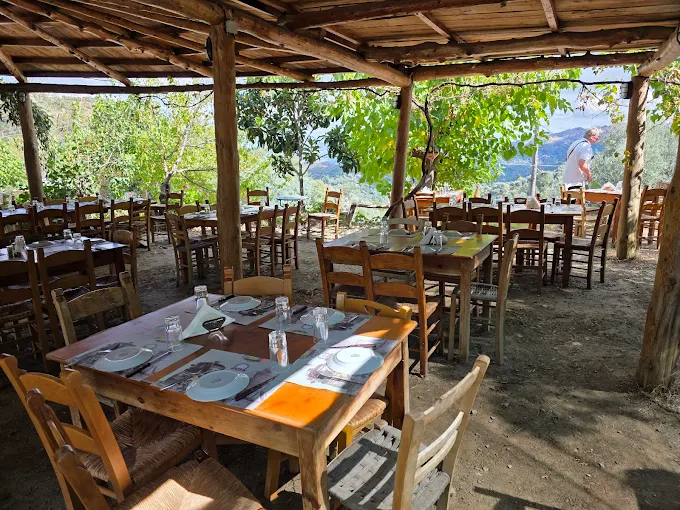
The village code: the kafenío, the festival and a little courtesy
Three simple rules open every door. One: sit at the kafenío, the central café where the elders gather — a 'kaliméra' and a Greek coffee are enough to break the ice, and a complimentary raki often follows. Two: aim for the paniyíria, the summer patron-saint festivals where the whole village dances, eats and adopts you for the night. Three: a little courtesy — shoulders covered in churches, don't photograph people without a smile first. Return the respect you're shown, and village Crete opens wide.
Frequently asked questions
What is the most beautiful village in Crete?
It depends what you're after. For the setting and coolness, Argyroupoli and its springs; for soul and music, Anogia on Psiloritis; for elegance and wine, Archanes; for Byzantine frescoes, Kritsa; for pottery, Margarites; for a peaceful sea, Mochlos. Each has a strong, genuine identity.
Do you need a car to visit Crete's villages?
Yes, strongly recommended. Most authentic villages are inland or in the mountains, poorly served by buses. A car (or an organised tour) lets you string two or three villages in a day, stopping for lunch at a taverna along the way.
Can you eat in the villages without speaking Greek?
No problem. In village tavernas you often order by pointing or trusting the owner — which is the best way. A few words ('kaliméra', 'efcharistó') and a smile are enough. The food is more authentic and far cheaper than on the waterfront.
When should you visit Cretan villages?
Spring (April–June) and autumn (September–October) are ideal: the mountains are green, temperatures mild for walking the lanes. In summer, head to altitude (Anogia) to escape the coastal heat, and aim for the village festivals (paniyíria) of July–August, high points of local life.
Weave these villages into your itinerary
Our generator slots villages of character between the beaches and the sites, in the right place and with the right base, to your days and your tastes.
Build my itinerary →Plan
Getting around
Explore
Beaches
Best beaches›Voulisma (Golden Beach)›Secret beaches›Balos or Elafonissi?›Falasarna›Seitan Limania›Nature & adventure
Samaria Gorge›Gorges & waterfalls›Things to do›Excursions: worth it?›Activities & tours›Boat cruises›Santorini day trip›Culture & history
Knossos (tickets)›Spinalonga›Lato (Dorian city)›Gournia (Minoan town)›Battle of Crete›Authentic villages›Essentials