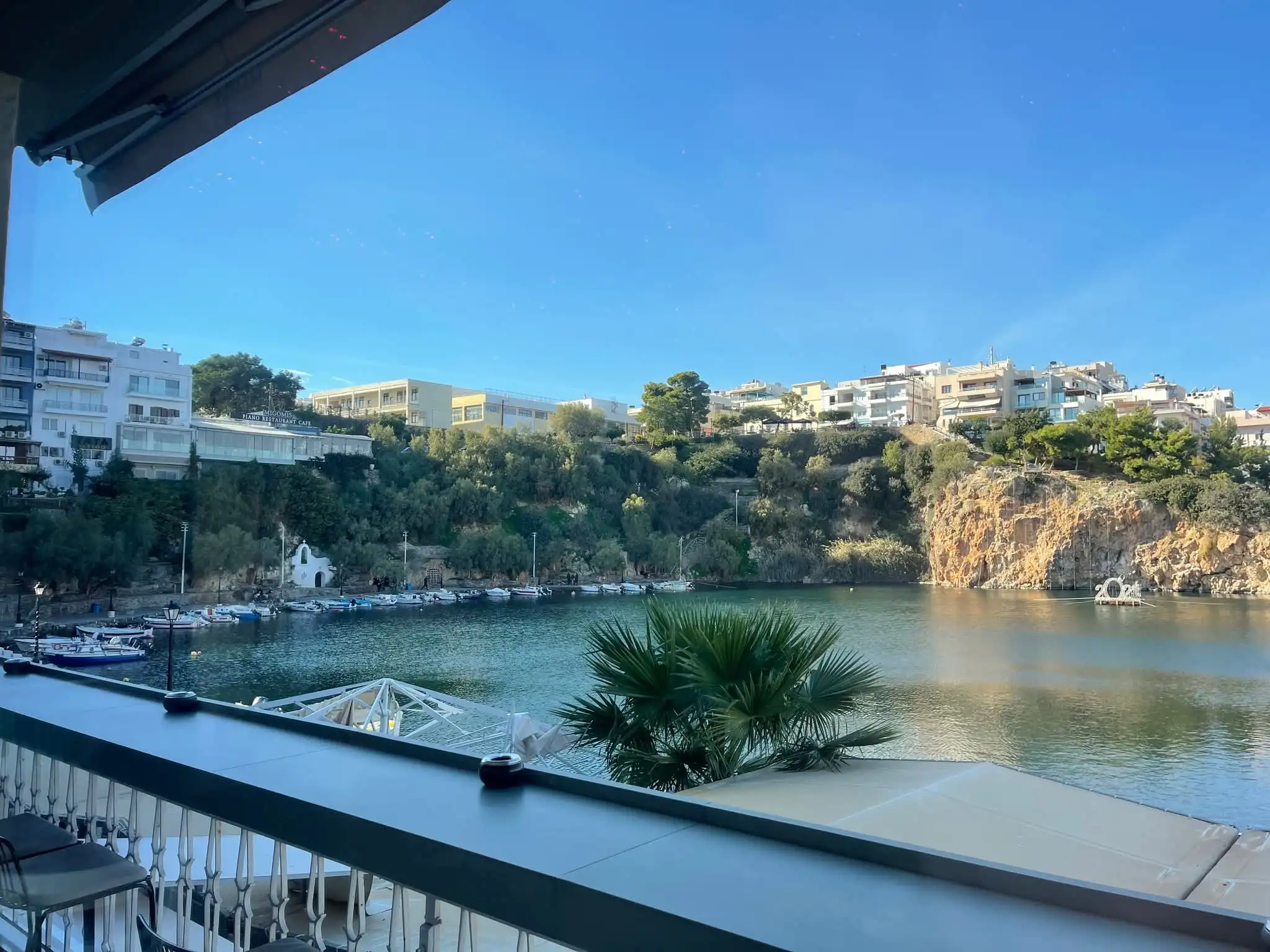
Buying in Crete: the real map of prices
From a €1,000/m² studio in the eastern interior to an €8,000/m² sea-view villa in Elounda, Crete isn't one market but ten. Here's the precise map of prices, region by region, village by village — and everything a foreign buyer must know before signing.
Island average
≈ €2,450/m²
Most expensive
Elounda
Cheapest
Eastern interior
Chania (past year)
≈ +20%
In Crete, a property's price isn't read in an average. It's read on a map.
Two similar houses fifteen kilometres apart can differ threefold. What sets the price isn't the square metre: it's the sea view, the distance to the beach, the village's charm, and above all the region. The west (Chania, Apokoronas) is the most sought-after by foreign buyers — Chania entered Greece's top-5 most expensive markets in 2024. The eastern interior (Ierapetra, Sitia, the plateaus) remains the island's best-kept secret.
This guide starts from that geography. The map below colours every town and village by its real price level. Below it: the region-by-region detail, the Golden Visa (and the Cretan surprise), the buying process for a non-resident, real costs, rental yields, the 2025 short-term-rental rules — and the pitfalls that cost dearly when you don't see them coming.
No agency brochure. The numbers, the map, and what nobody tells you.
The price map, village by village
Click or hover a point to see the price per m². Colour indicates the price level.
Asking prices, indicative (2024-2025), villa/apartment spread included. Prefecture medians reliable; village ranges triangulated.
The detail, region by region
Indicative price per m² (asking, 2024-2025). Median = prefecture median price.
Chania (west)
≈ 2 935 €/m²The priciest, most liquid market
Chania and Apokoronas concentrate foreign demand. Venetian old town, historic Halepa, stone villages 20 min from the sea, the Almyrida seafront: this is where prices rise fastest (+14.6% in 2025).
Rethymno (west-centre)
≈ 2 400 €/m²The best charm/price trade-off
Rethymno offers a Venetian old town without Chania's prices. The coast (Panormo, Bali) stays accessible; the interior (Spili, Amari valley) is among the cheapest on the island. Accelerating market (+9%).
Heraklion (centre)
≈ 1 999 €/m²The city, the yield, less of the charm
Heraklion is the most active and cheapest of the big prefectures (≈ €1,999/m²) — ideal for long-term letting, with Crete's best yield. The north coast (Hersonissos) lives on tourism; the south (Matala) and interior (Zaros) stay gentle.
Lasithi (east)
≈ 2 200 €/m²The extremes: Elounda and the backcountry
Crete's sharpest contrast: Elounda and Plaka play in the international luxury bracket (€5,000 to €8,000/m² and up), while Ierapetra, Sitia and the plateaus offer the island's lowest prices.
Choosing your area: the 20 investigations, no flattery
Prices don't tell you what life is like on the ground. For each area, an investigation: who lives there, at what human cost, what stays open in January, where water runs short and where the hospital holds. Start with the comparator, then dig into the area that speaks to you.
Centre-west — Rethymno
East — Lasithi
What owning costs you, every year
Cretan ENFIA is among Western Europe's lowest property taxes — around 0.08 to 0.20% of the price paid. But the real story is elsewhere: municipal taxes ride the electricity bill (two-thirds of which don't depend on your usage), insurance where earthquake cover isn't included by default, and two 2027 reforms — the new municipal « ΤΤΑ » and the cadastral-value revision — about to reshuffle the deck.
The three structural risks no brochure shows
A fourth consecutive dry year. In the Apokoronas hills, one household spent over 103 days without water. Before any deposit on high ground: mains, cistern, cut history, real August pressure.
The n°1 risk →Strained hospitals: 40-45% of posts vacant in Chania, a single anaesthetist in Ierapetra. The only university technical platform is Heraklion's hospital (PAGNI). Any move after 65 should weigh the distance to Heraklion.
Healthcare for expats →Many seaside villages die from October to March — Plakias has 136 permanent residents, Piskopiano and Koutouloufari become « ghost towns ». The advice buyers most ignore: rent a month in January before signing.
Alive or dead in winter →Elounda, the Cretan exception
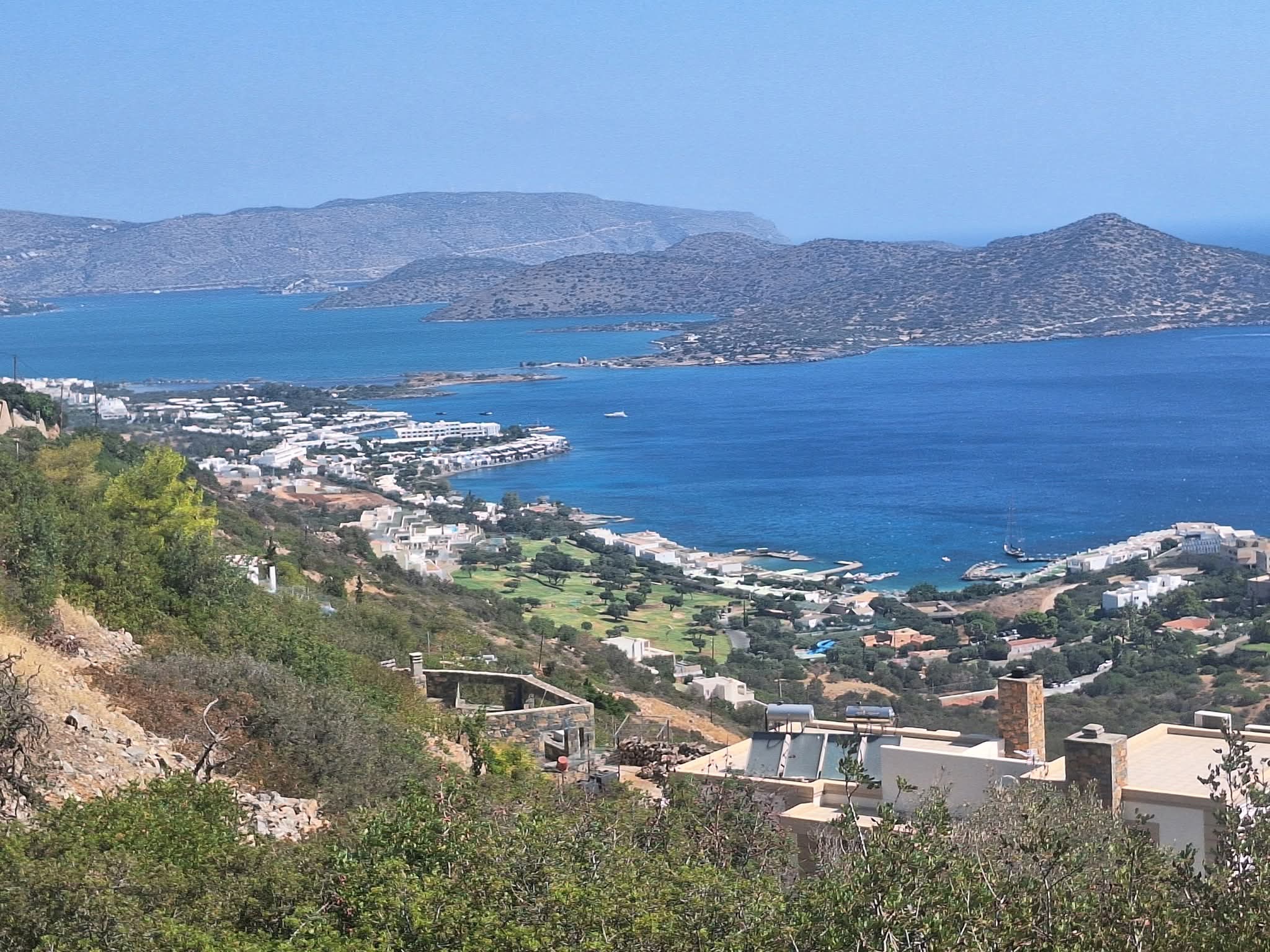
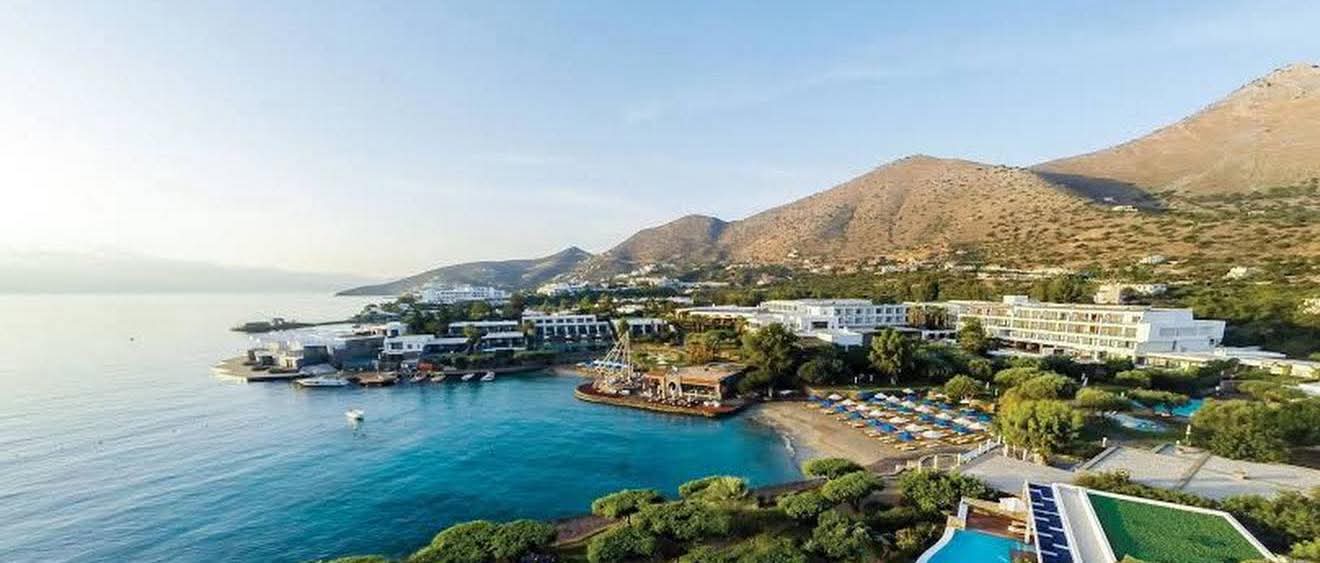
A single bay concentrates the top of the island's market: hillside villas, five-star resorts (including the Elounda Bay Palace), former fishing villages turned international addresses. This is where the square metre passes €5,000 and climbs beyond €8,000 for a sea view over Spinalonga. At the exact opposite end, an hour's drive away, the Sitia backcountry still trades around €1,000. The whole of Crete fits in that gap.
The market in 2026
What the numbers say.
Crete is, with the Cyclades, Greece's most dynamic property market. Foreign demand — driven by remote work, the Golden Visa and attractive pensioner taxation — outstrips a new-build supply constrained by strict coastal planning. The result: continuous growth, especially in the west.
But 'Crete' doesn't rise as one block. Chania (+14.6%) and Rethymno (+9%) heat up fastest; Heraklion, the cheapest, remains the best value for yield. Buying in the right place means choosing between likely appreciation (west, coast) and a low entry price (interior, east).
The curve that changed everything
Eight years ago, you bought in Crete for nearly half what it costs today.
The Greek market bottomed out in 2017, after falling roughly 42% from its 2008 peak. Then everything reversed. Recovery after the bailout exit (2018-2019), resilience in 2020 — COVID did not push prices down — then a genuine surge: +12% in 2022, +14% in 2023, +9% in 2024. Since the trough, the national index has climbed around 80%.
Crete beat the average: Chania became one of Greece's five most expensive markets, with asking prices up about 15% in the last year alone. The Golden Visa threshold hike to €800,000 (August 2024) has since cooled foreign demand — 2025 is returning to a calmer pace.
Curve: Bank of Greece residential property price index (+7.8% in 2025, slowing to +5.6% in Q1 2026) scaled to Crete's level, anchored on the Spitogatos Q4 2025 index (Chania ≈ €2,935/m²). Years before 2021 are indicative (±15%). Sources: Bank of Greece, Spitogatos — updated July 2026.
Two prefectures, two trajectories
Same island, same decade — but Chania broke away to the top.
Chania (west)
The priciestHeraklion (centre)
Best yieldModelled series (national index anchored to 2025 prefecture medians: Chania ≈ €2,935/m², Heraklion ≈ €1,999/m²). Shared scale across both charts.
Golden Visa & foreign buyers
Greece grants a renewable 5-year residence permit (the 'Golden Visa') in exchange for a property investment. Since the 2024 reform, the threshold is tiered: €800,000, €400,000 or €250,000 depending on the zone (tiers unchanged in 2026).
The Cretan surprise: the whole of Crete falls under the highest tier, €800,000. The rule targets Attica, Thessaloniki and EVERY island with more than 3,100 inhabitants — which captures the entire island, all four prefectures. The €400,000 tier applies nowhere in Crete. The only exception is the €250,000 route, reserved for converting a commercial property to residential or restoring a listed building.
Who can buy?
Any foreigner, EU or non-EU, can buy in Crete. Note: some designated border zones in the east (Lasithi) may require prior authorisation for non-EU buyers — check early. No residence is required to buy.
Golden Visa constraints
The investment must be a single property of at least 120 m². And since the reform, a property acquired under the Golden Visa CANNOT be used for short-term rental. The visa mainly matters to non-Europeans (EU citizens already move freely).
The buying process, step by step
For a non-resident buyer.
Tax number (AFM)
Mandatory for any transaction. Obtained at the tax office (DOY) via your appointed lawyer, in a few days.
Greek bank account
Needed for payments, taxes and utilities. Have proof of income and address ready.
Independent lawyer
The keystone of safety. Checks title, mortgages, debts and planning compliance. Fees ≈ 1–1.5% + VAT.
Engineer / surveyor
Certifies the building is legal (certificate of no arbitrary constructions), checks areas and the topographic diagram. A crucial step in Crete.
Preliminary contract
Reservation with a deposit (often 10%). It fixes the price and takes the property off the market during checks.
Notarial deed & registry
Signed before the notary, who authenticates the sale. Transfer tax is paid before signing, then the new deed is registered at the Cadastre (Ktimatologio).
The real transaction costs
On top of the purchase price. Budget 7 to 10% in total.
Realistic total: +7 to +10% of the price (a documented example: a €450,000 villa → ≈ 8.4%). Plus the annual property tax ENFIA: €2 to €16.20/m² by location, size and age.
What it really costs
Three typical properties, all-in — purchase price, fees, turnkey total.
Studio in Heraklion
City centre, long-term let
The entry ticket. ~40 m² near the port and university: Crete's best rental yield, around 5% gross per year.
Apartment in Chania
New town, near the old harbour
The lifestyle buy. ~70 m² minutes from the Venetian lanes, strong short-term-rental potential — check eligibility before buying.
Villa in Apokoronas
Almyrida / Vamos, sea view, new build
The expat dream. ~130 m² with a pool and bay view, in the heartland of foreign buyers. New build: lighter fees while VAT stays suspended.
Indicative 2025 estimates. Fees = transfer tax, notary, lawyer, agent, registry (new builds benefit from the VAT suspension until end-2025). Excludes furnishing and works.
Estimate your budget live
Pick a town and a size — the price and fees update in real time.
Indicative estimate: size × the town's median asking price, plus ~9% fees (transfer tax, notary, lawyer, agent, registry). Excludes furnishing, works and VAT on new builds. Not a substitute for a quote.
Rental yield & short-term letting
What a Cretan property actually returns.
Average gross yield runs around 4.4% in Greece; Heraklion tops 5% on long lets — among the best in the country. On short-term lets, tourist zones (Chania, north coast, Elounda) can target 6 to 10% gross — but the Cretan season is short (May-October), Airbnb competition fierce, and the new 2025 charges erode the net. Model conservatively.
Short-term letting: the 2025 rules
Every short-term let (under 60 days) must have an AMA registration number (AADE registry) shown on listings — without it, no Airbnb/Booking listing. Law 5170/2025 has imposed safety standards since October 2025 (civil-liability insurance, electrical certificate, fire extinguishers, smoke detectors, marked exits), with fines of €5,000 to €20,000. A climate levy applies per night: €8 (March-October), €2 (November-February).
Two decisive points before buying to let short-term: an individual may only let 2 properties short-term (beyond that, a company is required); and above all, a freeze on new licences already hits central Athens (Thessaloniki has followed since March 2026) — Crete isn't affected yet, BUT Chania is named among the government's five next target zones (alongside Santorini, Paros, Halkidiki and Thessaloniki's 1st district). Announced in early 2026, the freeze was still not enacted as of mid-2026 (the ministerial decree was pending): one to watch closely, but not yet in force. Always check the property's eligibility before buying.
The pitfalls that cost dearly
What a lawyer and an engineer check — and why it matters.
Unpermitted constructions (afthaireta)
Very common in Crete: a room, a pool or a veranda added without a permit. Until it's regularised, the property CANNOT be legally sold. Never buy 'hoping to legalise later' — it can become unsellable and un-mortgageable.
Unclear title & inheritance
An estimated 20% of Cretan properties have unclear ownership (family co-ownership, informal transfers, a cadastre still being finalised). A single reluctant heir can block everything. Insist on a full title search.
Forest, Natura, archaeology
Land flagged as forest, in a Natura 2000 zone or an archaeological perimeter may be unbuildable. Crete is site-rich — the Ephorate can restrict or halt building.
Coastal strip (aigialos)
Within 100 m of the shore, if the public-domain boundary isn't officially demarcated, no permanent construction is allowed. A classic deal-killer on sea-view plots.
Access & services
An unmaintained private road, an unregistered track, no water/electricity connection: classic extra costs and disputes in the backcountry. Verify legal access, not just a track.
Frequently asked questions
Can a foreigner buy freely in Crete?
Yes, EU and non-EU alike, with a Greek tax number (AFM) and a bank account. No residence is required. Caveat: some border zones in the east (Lasithi) may require authorisation for non-EU buyers — check early.
Which region is cheapest?
The east and interior: Ierapetra, Sitia, the plateaus (Lasithi) and the backcountry valleys (Amari, Zaros) show the lowest prices, often €1,000 to €1,900/m². The trade-off: less liquidity and slower appreciation.
And the most expensive?
Elounda and Plaka (Lasithi), followed by Chania's old town, Halepa and upscale Apokoronas (Almyrida, Akrotiri). Elounda regularly tops €5,000/m² and reaches €8,000/m² and up for sea-view villas.
What's the Golden Visa threshold in Crete?
€800,000. Contrary to a common belief, all of Crete falls under the highest tier (the rule on islands over 3,100 inhabitants). Only the €250,000 route remains possible, for converting a commercial property to residential or restoring a listed building. A Golden Visa property cannot be short-term let.
What fees on top of the price?
Budget 7 to 10%: transfer tax 3.09%, notary 1–2%, lawyer 1–1.5%, agent ≈ 2%, registry. Plus the annual ENFIA property tax (€2 to €16.20/m²). VAT on new builds is suspended until end-2025.
Can you do Airbnb letting?
Yes, but it's regulated: mandatory AMA registration number, safety standards (Law 5170/2025), a per-night climate levy, a maximum of 2 properties per individual. And Chania is on the shortlist of zones where new licences could be frozen in 2026. Check eligibility before buying.
Continue your life project
Property is only one piece of the puzzle.
Plan
Getting around
Explore
Beaches
Best beaches›Voulisma (Golden Beach)›Secret beaches›Balos or Elafonissi?›Falasarna›Seitan Limania›Nature & adventure
Samaria Gorge›Gorges & waterfalls›Things to do›Excursions: worth it?›Activities & tours›Boat cruises›Santorini day trip›Culture & history
Knossos (tickets)›Spinalonga›Lato (Dorian city)›Gournia (Minoan town)›Battle of Crete›Authentic villages›Essentials