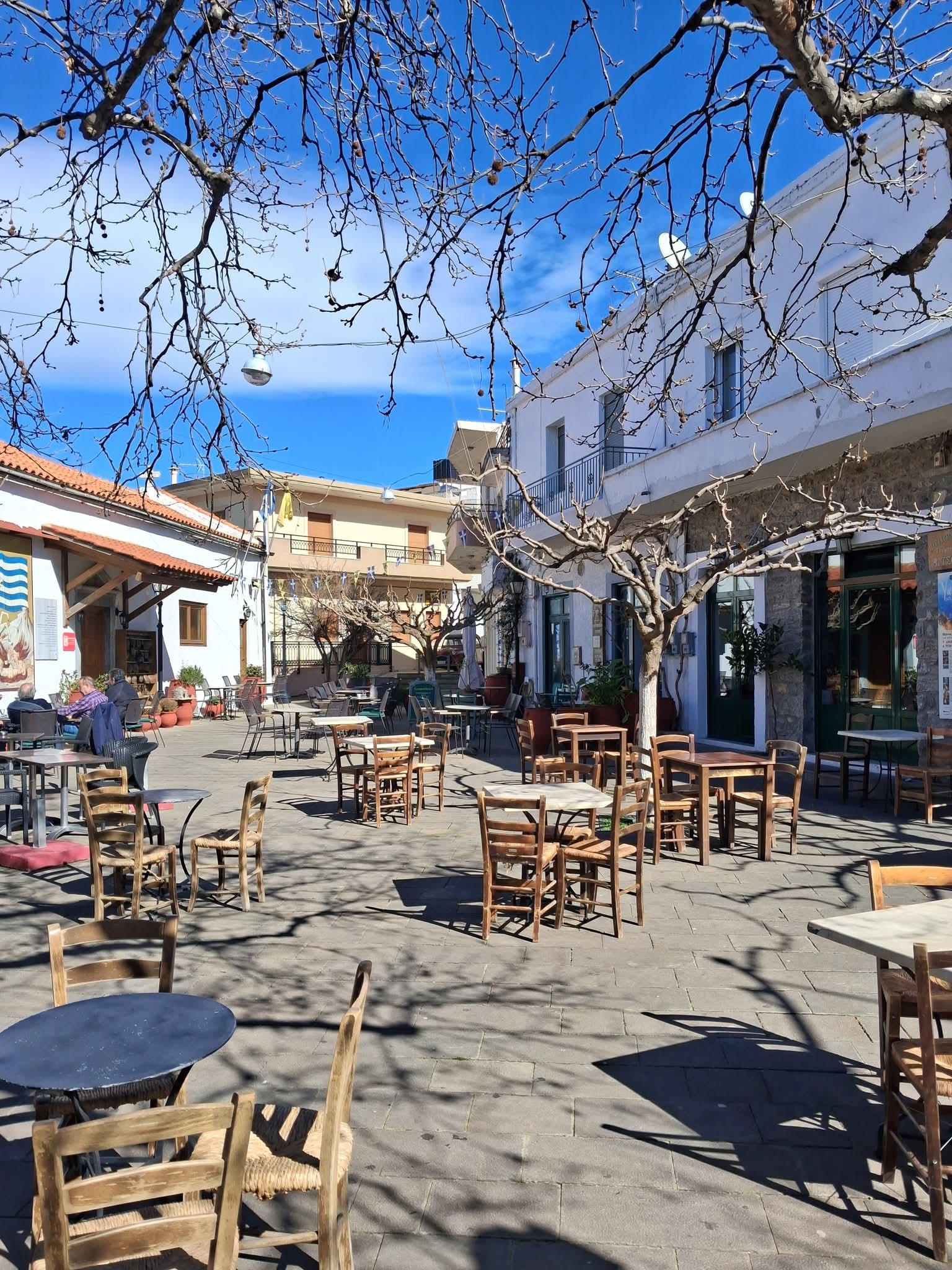
Anogia
Perched at 740 m on Mount Psiloritis, Crete's proudest village: home of the lyra, land of resistance, of weavers and shepherds — and the gateway to the island's highest mountain, white with snow in winter.
Crete's proudest village — and it paid dearly for it
Anogia has always resisted: the Turks in 1821 and 1866, the Germans in 1944. In reprisal for its role in the resistance and the abduction of General Kreipe, the village was razed to the ground and its men shot on the orders of General Müller. Rebuilt stone by stone, Anogia wears that memory in the open: busts of resistance leaders, wall murals, dates carved into the walls. You don't visit Anogia like a backdrop — you feel a living, almost fierce pride, nothing like a tourist re-enactment.
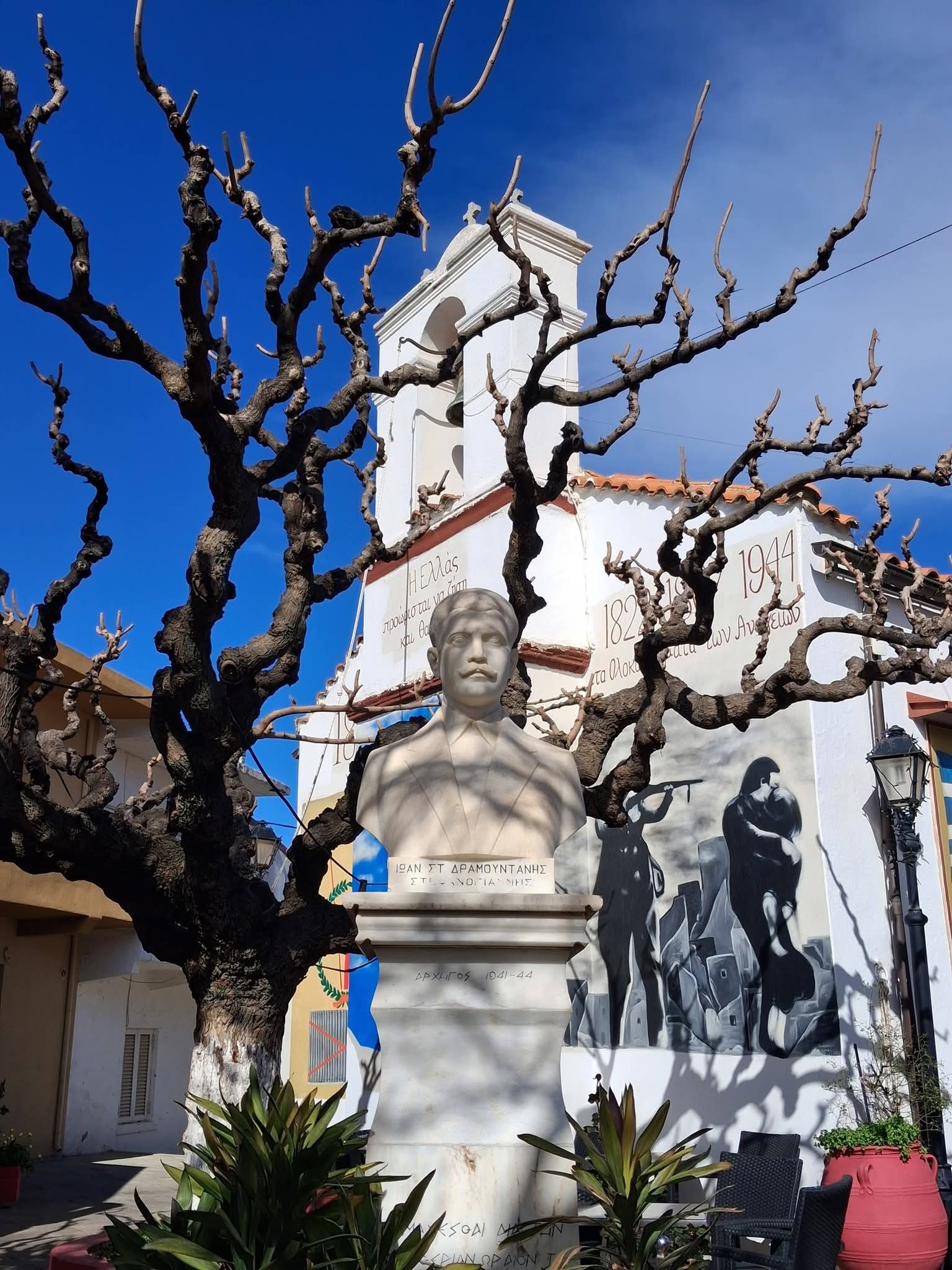
The cradle of Cretan music, and a village of weavers
No village has shaped Cretan music like Anogia: it's the home of the lyra and of the dynasties that carried it across Greece — the Xylouris family (the legendary Nikos, known as Psaronikos, and Psarantonis) and the Skoulas. In the evening, in certain tavernas, the lyra and laouto still take up the mantinades. The other great tradition is the women: Anogia is renowned for its hand-weaving, and its shops overflow with blankets, rugs and fabrics in vivid patterns, woven on the loom as they always were.
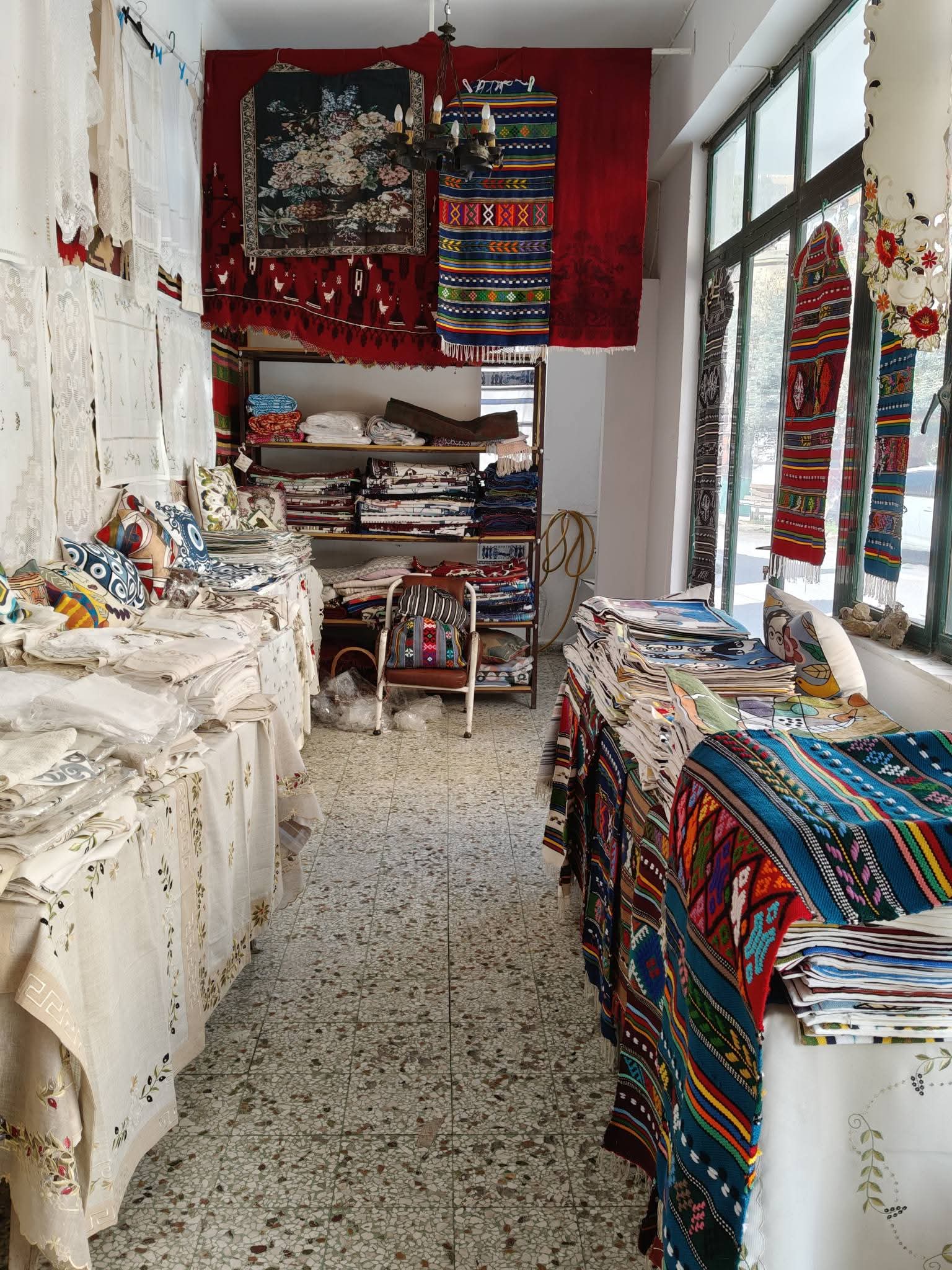
Antikristo: the shepherds' lamb, roasted upright over the wood fire
Anogia is a village of shepherds, and its cooking shouts it. The speciality is antikristo: large pieces of lamb driven onto vertical spits, set in a circle 'facing the fire' of embers, cooking slowly for hours to a melting, smoky flesh. It comes with mountain cheese, potatoes and a glass of raki. In the tavernas of the upper village it's still a ritual, not a show for tourists — the finest meat meal in Crete.
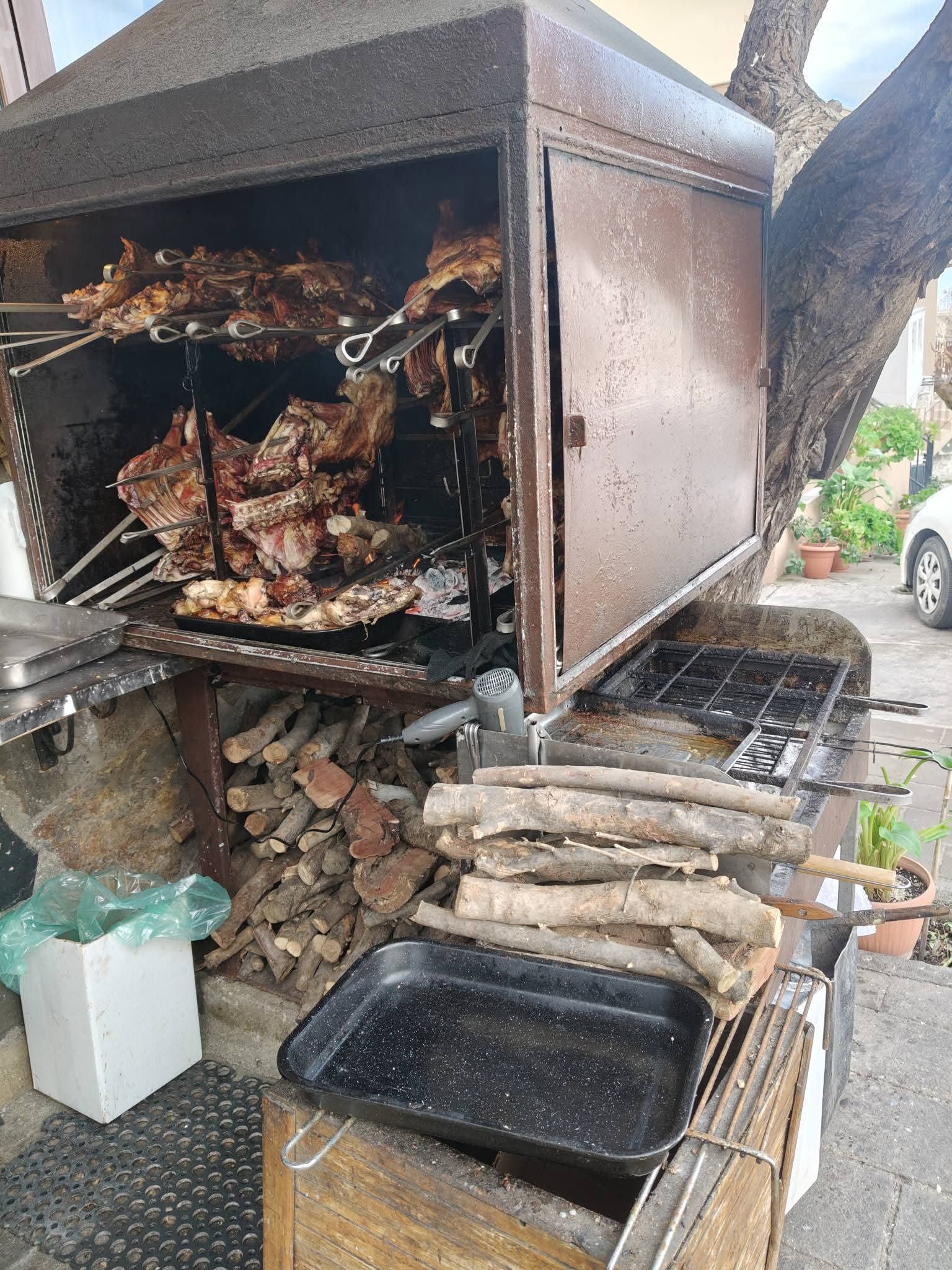
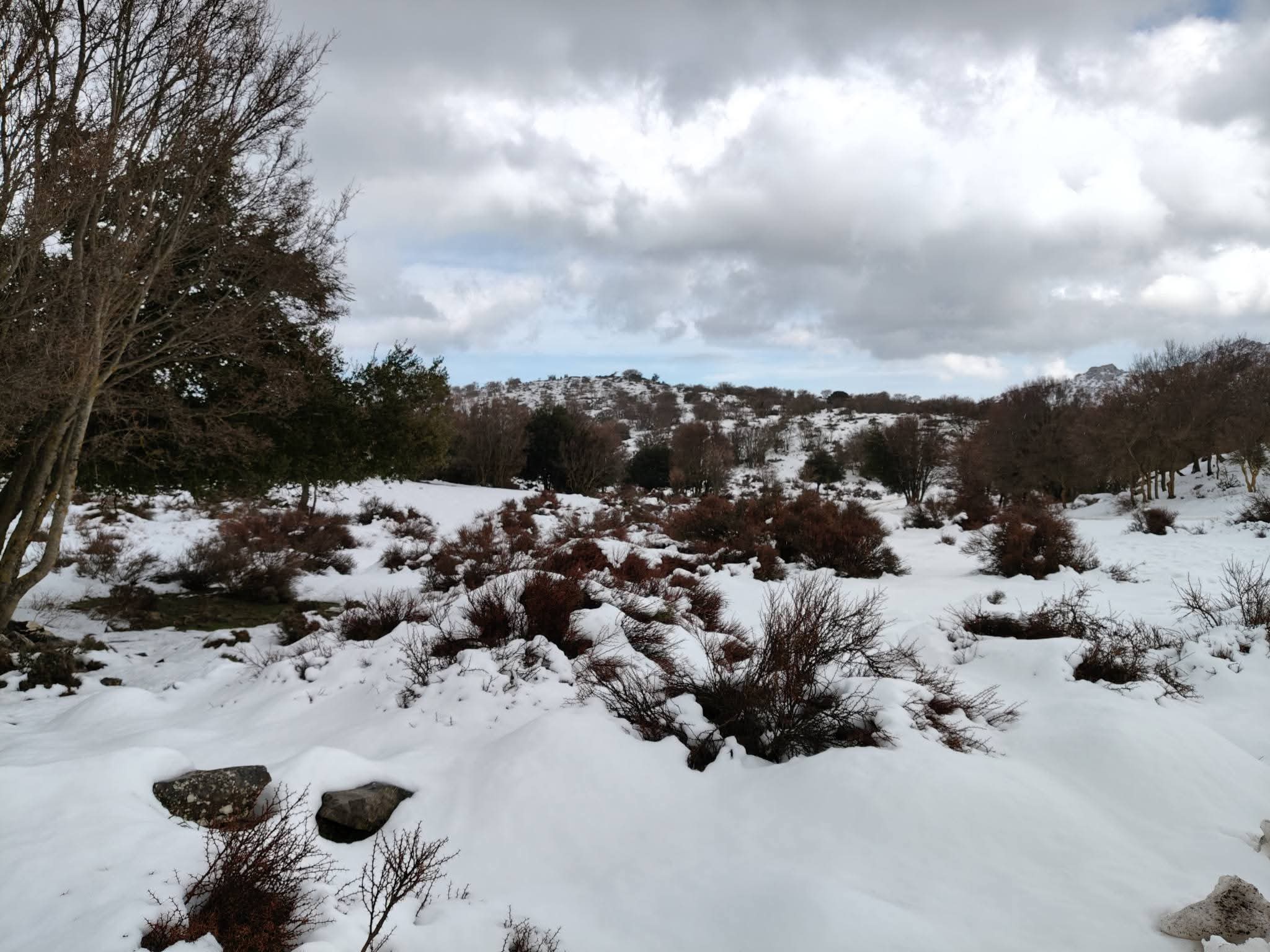
Psiloritis at its feet: the Nida plateau and winter snow
Anogia is the gateway to Psiloritis, Crete's highest mountain (2,456 m). From the village, a road climbs to the Nida plateau (1,400 m), its mitata (stone shepherds' huts) and the Idaean Cave (Idaion Andron), where legend raised the god Zeus. It's the start of the climb to the summit, Timios Stavros. In winter everything turns to snow: a rare landscape in Crete, where you can go from beach to powder in an hour's drive. An end-of-the-world setting, only half an hour from the coast.
💡 Doing it right
- Dine at a taverna in the upper village for antikristo, lamb roasted upright over the wood fire — Anogia's speciality.
- Look for an evening with live lyra: Anogia is the best place in Crete to hear real Cretan music.
- Push on to the Nida plateau (1,400 m) and the Idaean Cave; in winter the road can be snowbound — check conditions.
- Bring back a hand-weaving: blankets, rugs and fabrics are a living village tradition.
Frequently asked questions
Where is Anogia and how do you get there?
On the northern slopes of Mount Psiloritis, in central Crete, about 37 km (50 minutes) from Heraklion and 55 km from Rethymno on a paved mountain road. Easy to reach by car; it's also the starting point for the Nida plateau and the Idaean Cave.
Why is Anogia famous?
For three things: music (it's the cradle of the Cretan lyra and of legendary families like the Xylouris and the Skoulas), resistance (the village was razed by the Germans in 1944 and rebuilt), and craft (hand-weaving). Not to mention antikristo, lamb roasted over a wood fire.
What should you eat in Anogia?
Antikristo above all: lamb driven onto vertical spits and slow-roasted around the embers, the speciality of the Psiloritis shepherds. Add mountain cheeses, honey, potatoes and a raki. The best tavernas are in the upper part of the village.
Can you see snow near Anogia?
Yes, in winter. Psiloritis, Crete's highest mountain (2,456 m), is snow-covered from December to March, and the road to the Nida plateau then crosses snowy landscapes rare on the island. Always check road conditions after heavy snowfall.
Slot Anogia into your itinerary
Our generator places the village and its mountain at the right point of your trip, between Heraklion, Knossos and the island's centre.
Build my itinerary →Plan
Getting around
Explore
Beaches
Best beaches›Voulisma (Golden Beach)›Secret beaches›Balos or Elafonissi?›Falasarna›Seitan Limania›Nature & adventure
Samaria Gorge›Gorges & waterfalls›Things to do›Excursions: worth it?›Activities & tours›Boat cruises›Santorini day trip›Culture & history
Knossos (tickets)›Spinalonga›Lato (Dorian city)›Gournia (Minoan town)›Battle of Crete›Authentic villages›Essentials