Kritsa
Above Agios Nikolaos, a large mountain village of white, flower-filled lanes, famous for its embroidery, the Byzantine frescoes of Panagia Kera and the ancient city of Lato just above.
Kritsa in pictures
Aerial views of Kritsa, then a slow walk from the village church along the flower-lined main street — shops, souvenir stalls and tavernas — to the sculpture of a young girl embroidering, the village's emblem. One of the most beautiful villages in East Crete, above Agios Nikolaos.
One of Crete's largest mountain villages
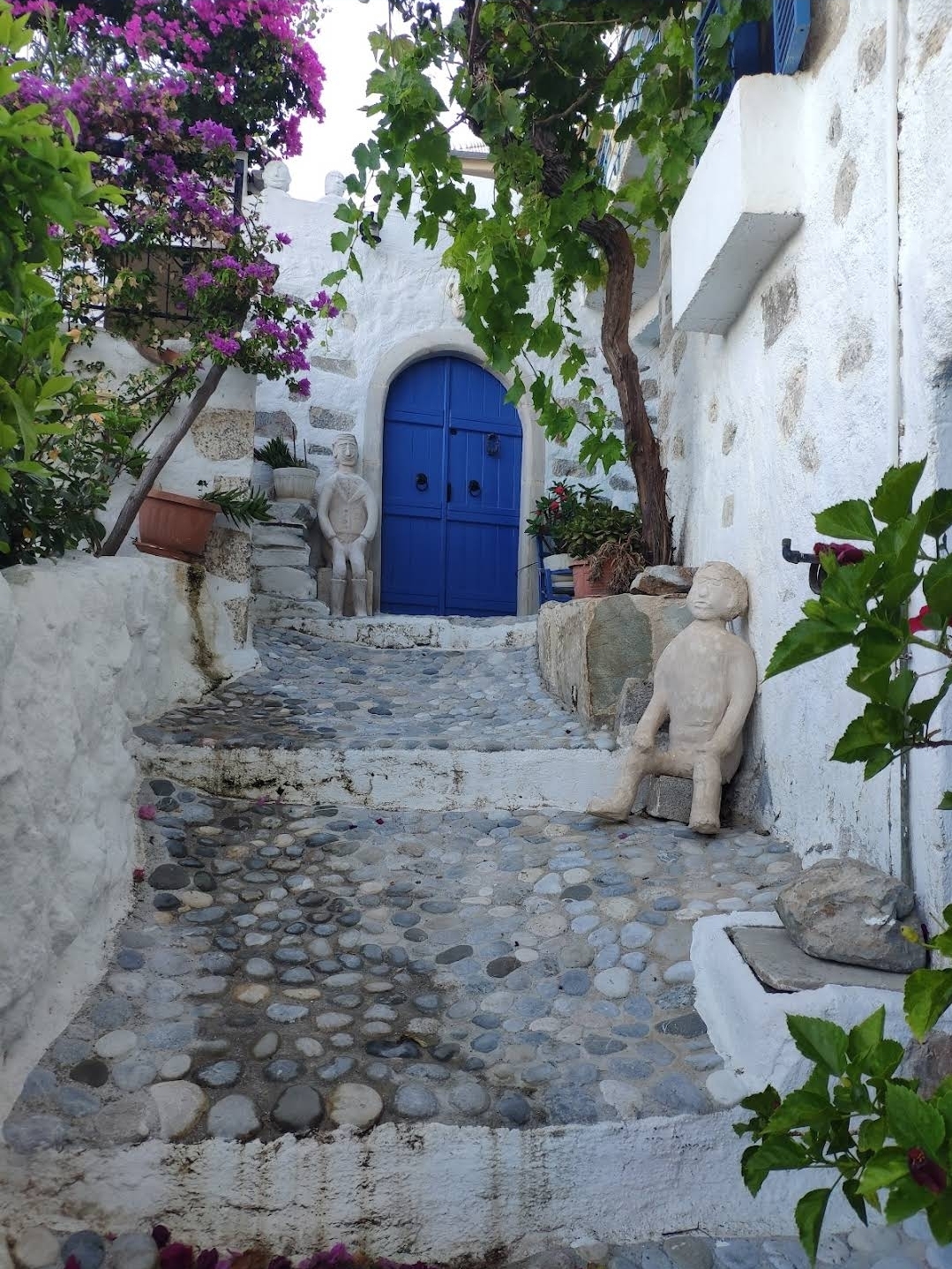
Clinging to the slopes of Mount Dikti above the Gulf of Mirabello, Kritsa is one of the island's largest and oldest villages — and one of its most photogenic. You lose yourself in a maze of stepped white lanes, among blue doors, vine trellises, bougainvillea and cats in the sun. It's also a village of craftswomen: hand-woven and embroidered textiles hang on the façades and are sold straight from the workshop. Sit at a café under the great plane tree, and you soon see why Kritsa has served as a film set. On the main street, a sculpture of a young girl bent over her embroidery pays tribute to this tradition.
Lunch under the vine
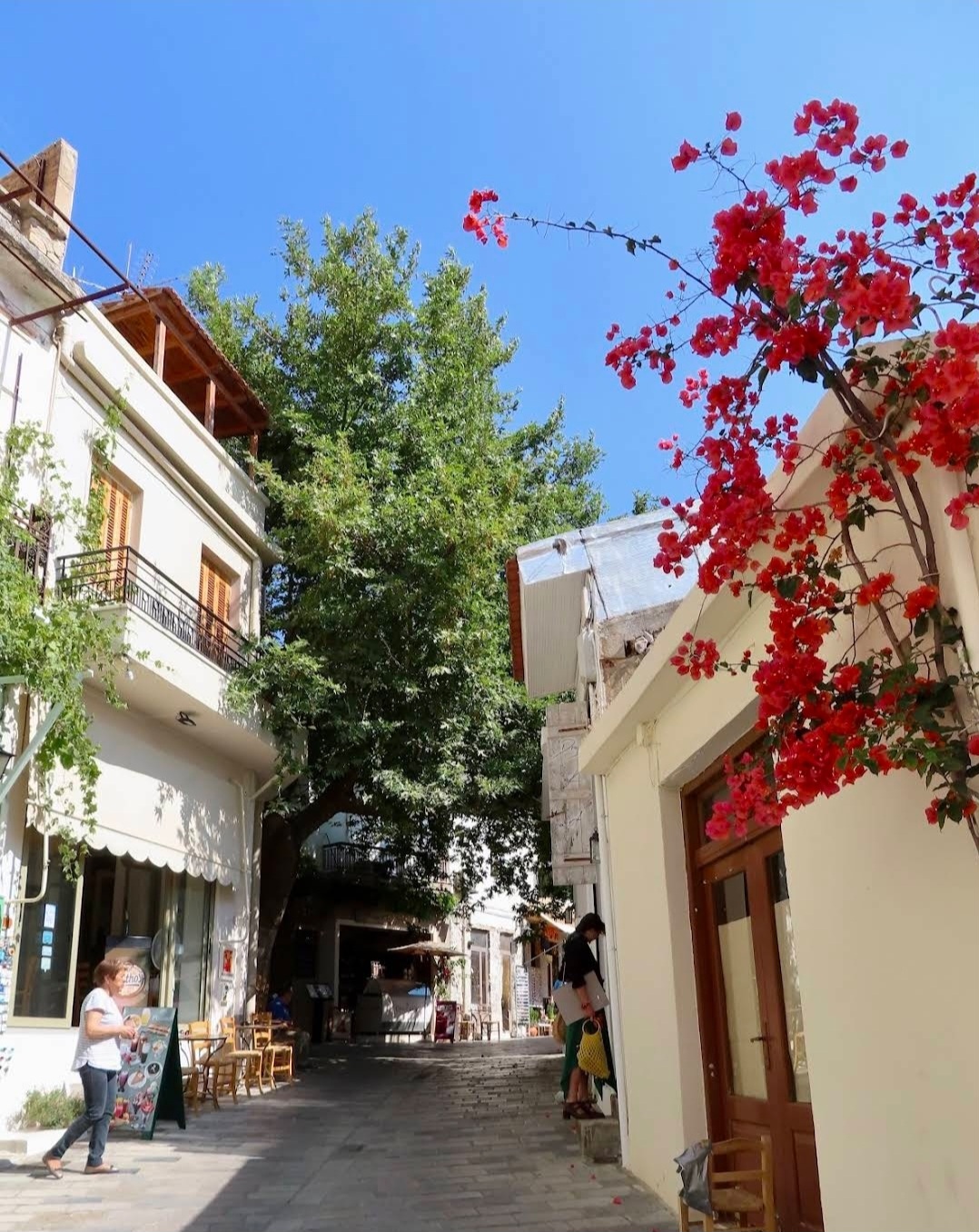
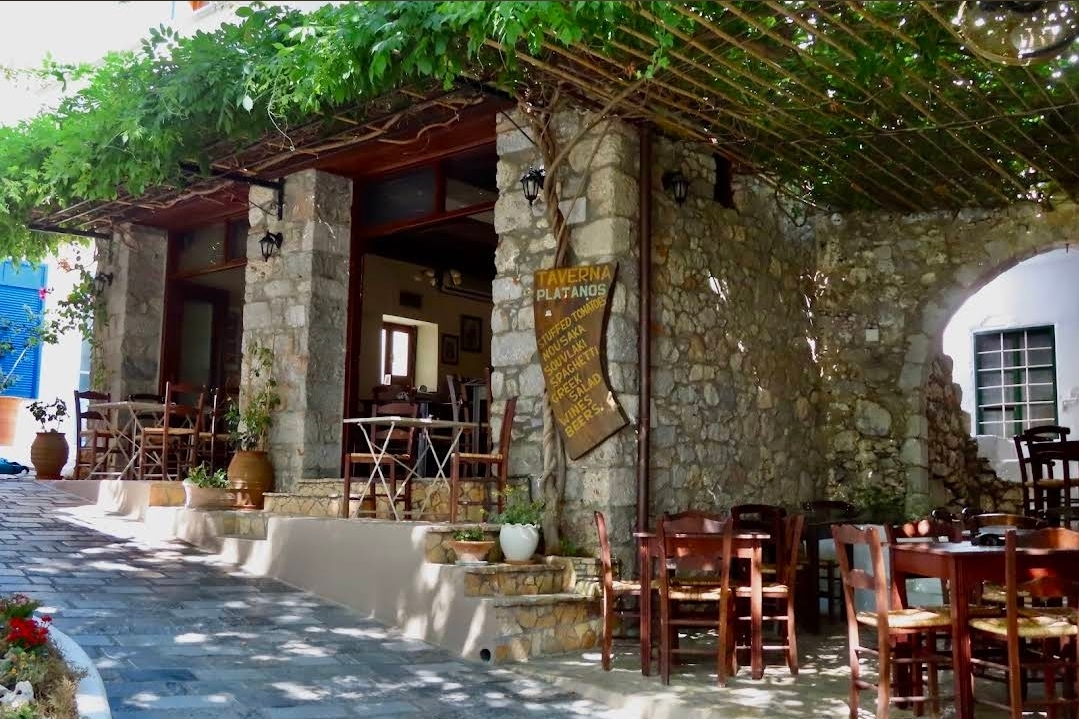
Kritsa lives all year round, and you feel it at the table: the village tavernas, shaded by vines and plane trees, serve honest, inexpensive Cretan cooking — moussaka, lamb, dakos, garden vegetables, local wine. You eat far better here, and for far less, than on the nearby Agios Nikolaos waterfront. Take time over a long lunch beneath the vine, then a Greek coffee: here, the art of living isn't a show for tourists, it's daily life.
Panagia Kera and ancient Lato
A kilometre from the village, among the olive trees, the little Byzantine church of Panagia Kera holds what many consider Crete's finest and best-preserved frescoes (13th–14th century): an ensemble of rare richness, an absolute must. A few kilometres higher, the ancient Dorian city of Lato spreads its ruins across a saddle between two peaks, with a plunging view over Agios Nikolaos and the Gulf of Mirabello — one of Greece's best-preserved ancient sites, and rarely busy. A note for film buffs: it was at Kritsa that Jules Dassin shot He Who Must Die in 1957.
The Kritsa gorge, wild and quiet
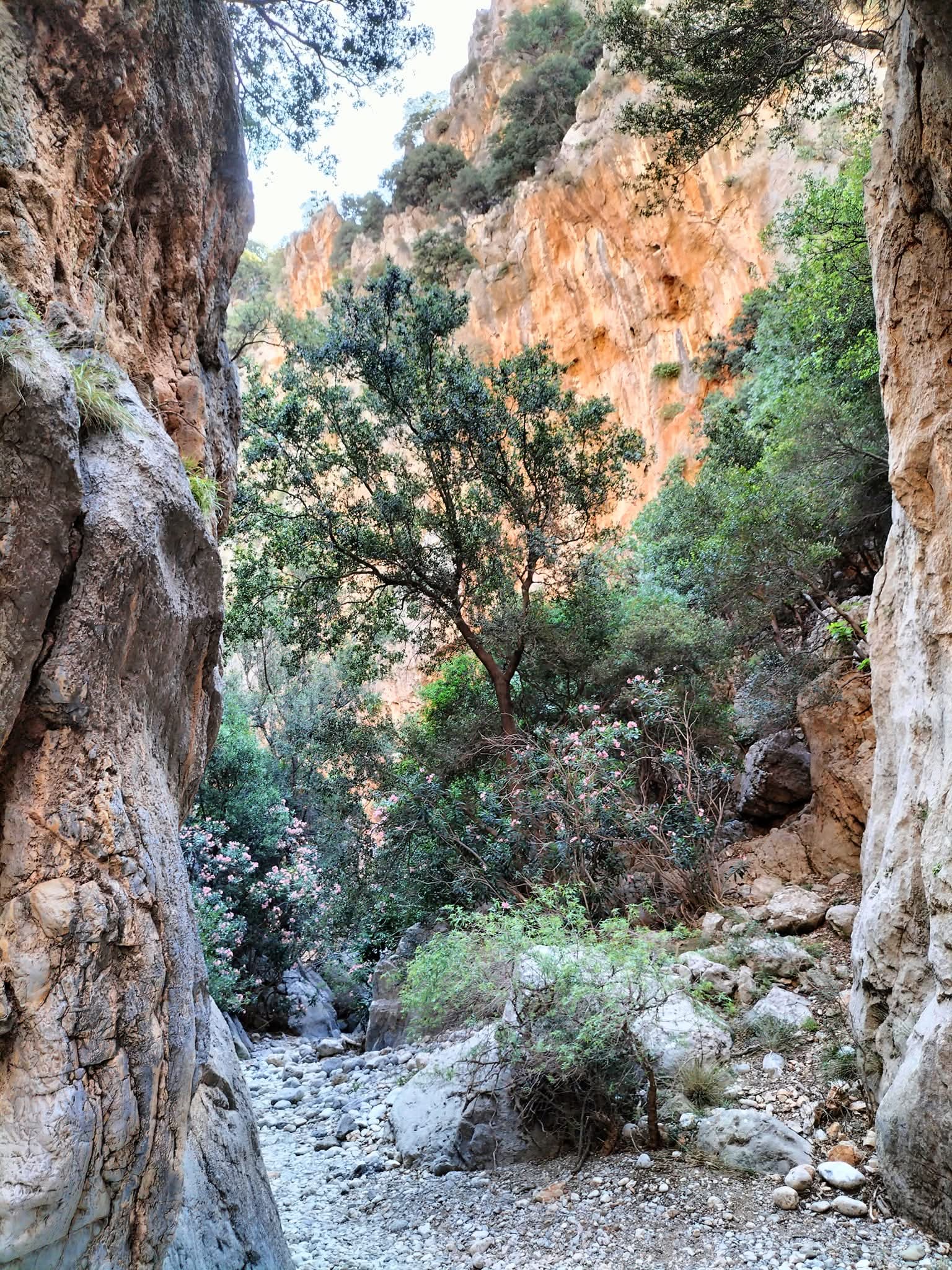
Just above the village opens the Kritsa gorge: two narrow limestone walls, a bed of pebbles, oleanders in bloom in spring, and almost no one. Far less busy than Samaria, it's walked at your own pace, between hiking and a few bolted climbing pitches for enthusiasts. It's the ideal outing to complement the cultural visit: an hour or two in the cool, in a spectacular rocky setting, before heading back down to lunch in the village.
💡 Doing it right
- String together the three highlights: Panagia Kera (at the village entrance), the village and its lunch, then Lato (10 min higher) for the view.
- Buy an embroidery or a woven cloth straight from the workshop in the lane — the best way to support the local craft.
- Come early morning or late afternoon: soft light on the white houses and fewer coach tours.
- Bring good shoes for Lato (a sloping site) and for the Kritsa gorge.
Frequently asked questions
Where is Kritsa and how do you get there?
In Lassithi, eastern Crete, about 11 km west of Agios Nikolaos (20 minutes on an easy road), on the slopes of Mount Dikti. It's an ideal half-day trip from Agios Nikolaos or Elounda; a car is recommended.
Why is Kritsa famous?
For three reasons: it's one of Crete's largest and oldest villages, with very photogenic white lanes and a tradition of embroidery and weaving; the Byzantine church of Panagia Kera holds the island's finest frescoes; and the ancient Dorian city of Lato commands the valley just above.
What is Panagia Kera?
A small Byzantine church about 1 km from the village, among the olive trees, decorated with 13th- and 14th-century frescoes considered Crete's finest and best-preserved. There's a small entry fee and the visit is short but unforgettable.
What is there to see around Kritsa?
The ancient city of Lato (Dorian ruins with a view over the Gulf of Mirabello), Agios Nikolaos and its Lake Voulismeni, the Kritsa gorge for a cool walk, and further afield the fortress island of Spinalonga. Kritsa and Lato combine easily in one morning.
East Crete, around the Gulf of Mirabello
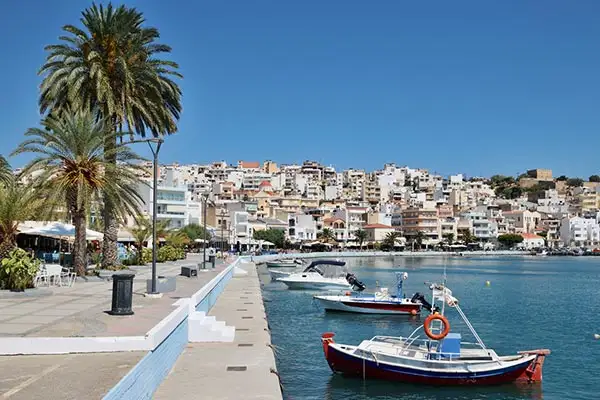
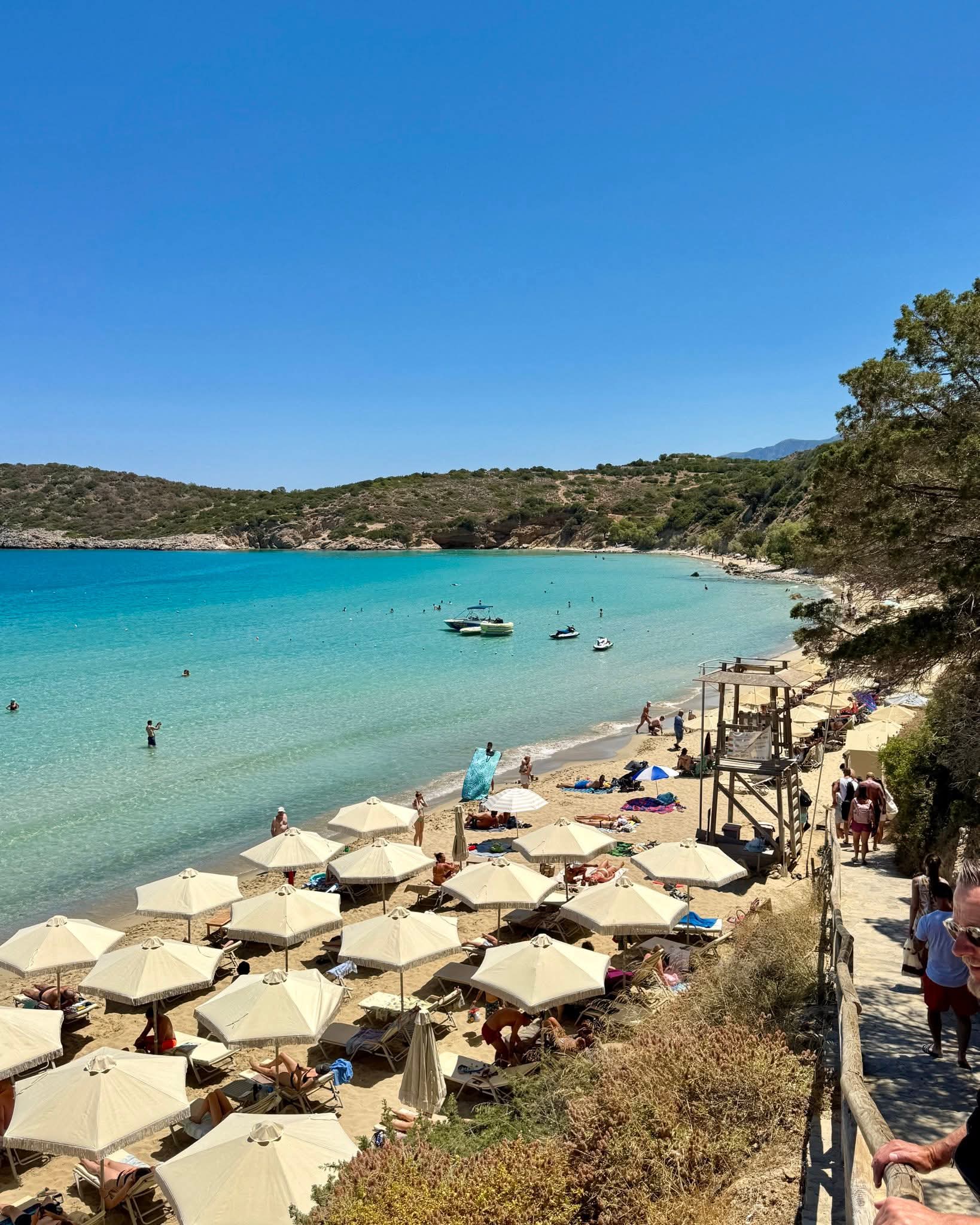
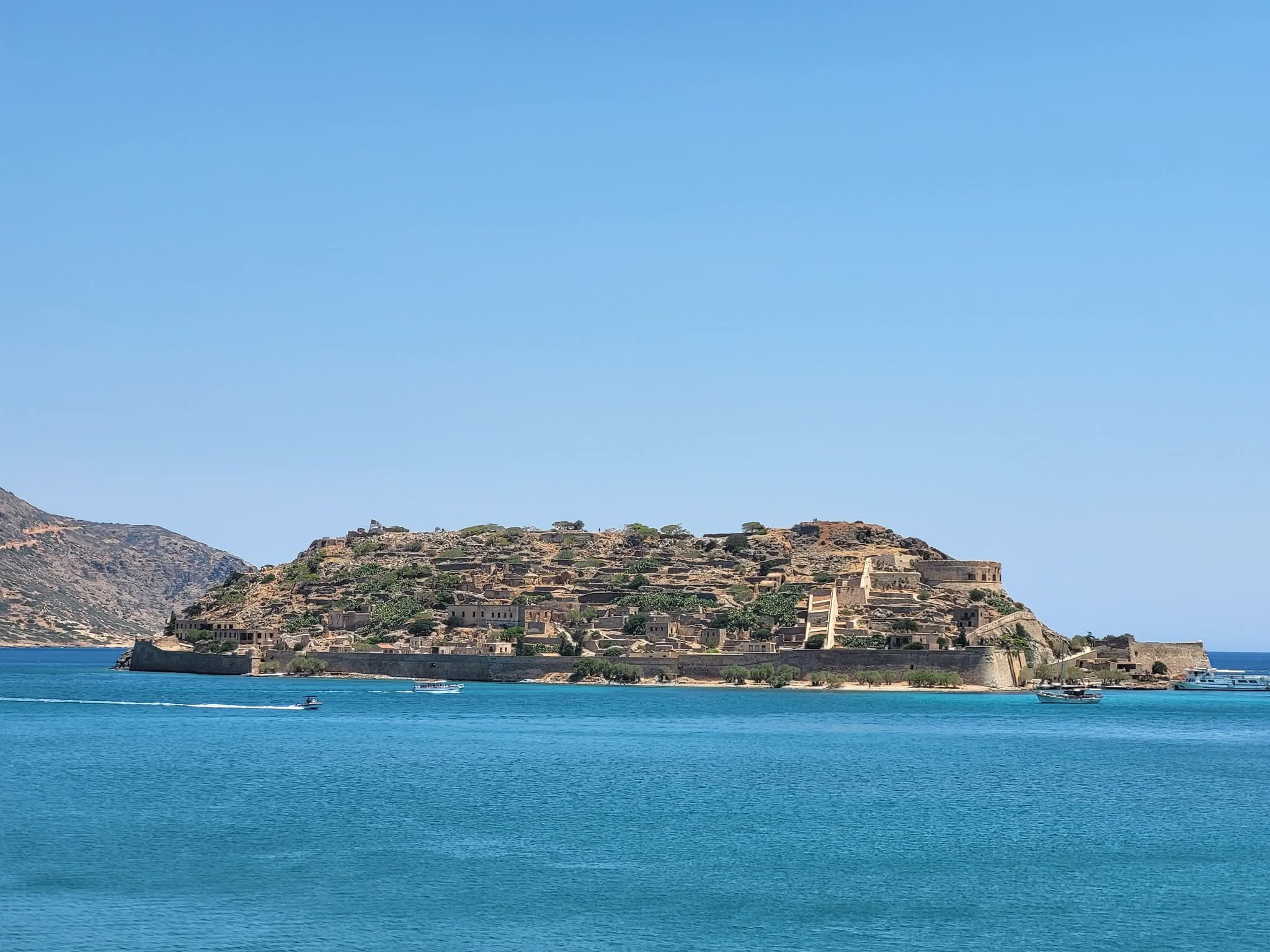
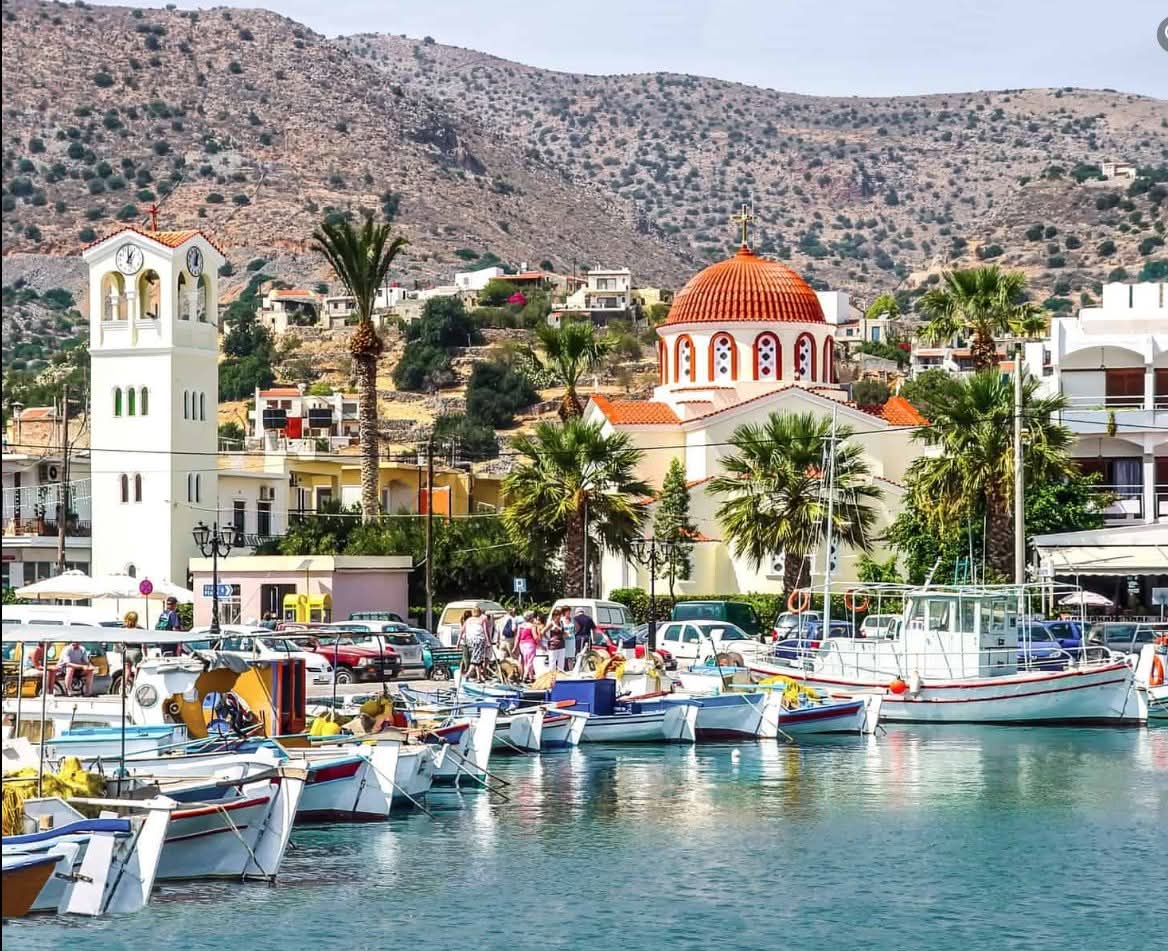
Four places a few kilometres apart — the harbour, the beaches, the village, the fortress.
Slot Kritsa into your itinerary
Our generator pairs the village with Panagia Kera, Lato and Agios Nikolaos, at the right point of your eastern-Crete loop.
Build my itinerary →Plan
Getting around
Explore
Beaches
Best beaches›Voulisma (Golden Beach)›Secret beaches›Balos or Elafonissi?›Falasarna›Seitan Limania›Nature & adventure
Samaria Gorge›Gorges & waterfalls›Things to do›Excursions: worth it?›Activities & tours›Boat cruises›Santorini day trip›Culture & history
Knossos (tickets)›Spinalonga›Lato (Dorian city)›Gournia (Minoan town)›Battle of Crete›Authentic villages›Essentials