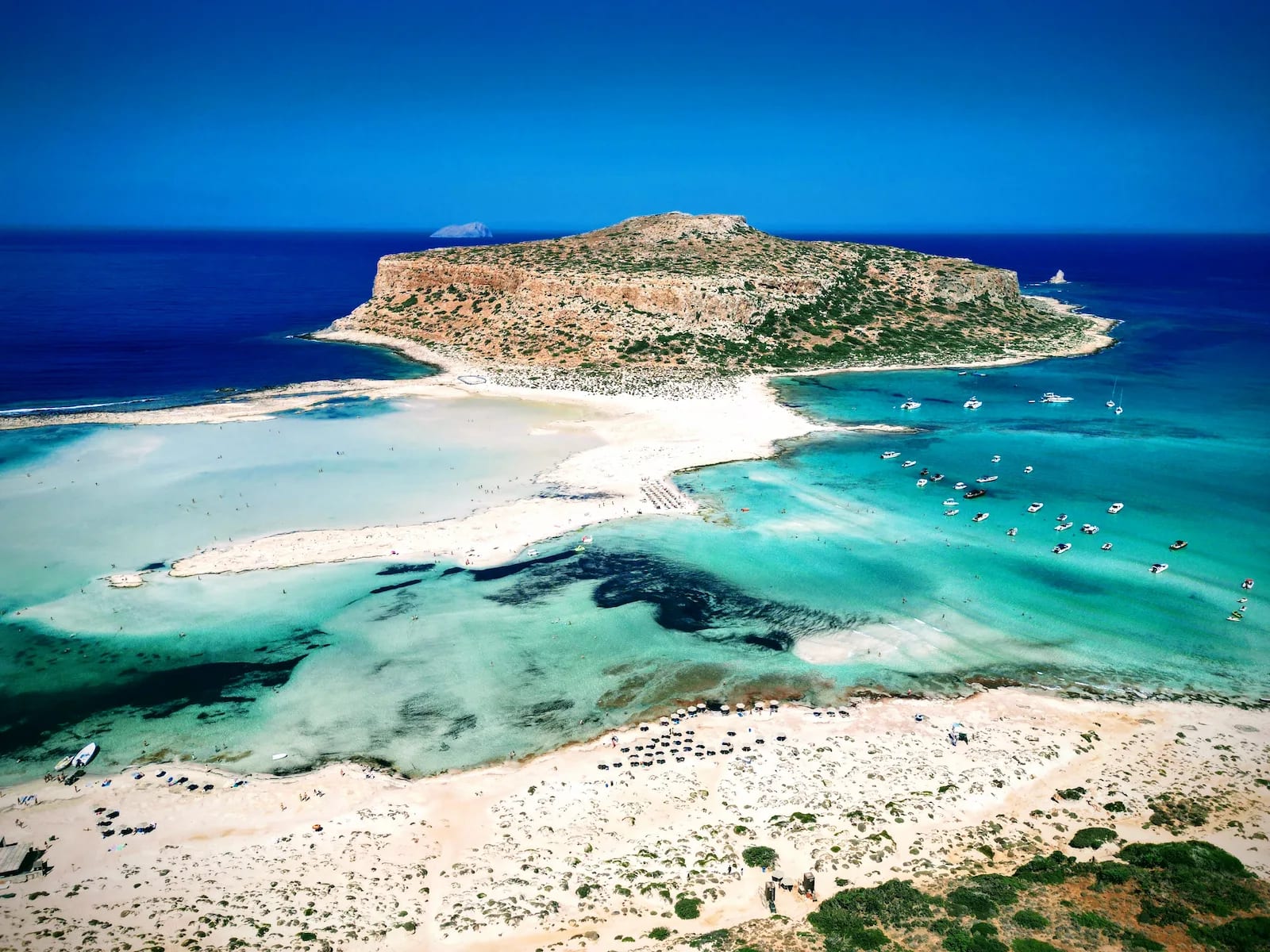
Crete in August
August is Crete at its climax: the sea at its warmest, the festivals at their loudest, the island at its fullest. The month of maximum intensity, in every sense.
In August, Crete is at its absolute peak: sea at 26-27°C, air of 30-31°C (with heatwaves of 35°C and more), and above all the biggest crowds and highest prices of the year, cresting around 15 August (Dekapentavgoustos). Magnificent for celebration and swimming, gruelling if you want calm. If you're not tied to the school calendar, September offers almost the same sea with far fewer people.
At a glance
The hottest and most festive month — but also the priciest and most crowded. Magical if you love crowds and celebration, exhausting otherwise.
August isn't the strategic month — and how to do it well anyway
Let's be frank: if your calendar is free, this isn't the month to pick. Heat, crowds and prices are all at their summit, and September's sea is nearly identical for far fewer people. But millions of travellers are tied to school holidays — so here's how to do August well. One, shift your days: beach before 10am and after 5pm, siesta or the interior (3-5°C cooler) at midday. Two, follow the wind: when the meltemi blows in the north, head for the south coast (Libyan Sea) — Preveli, Plakias, Loutro, Matala stay swimmable. Three, book early: accommodation 3-4 months ahead, car likewise, above all the week of 15 August. Four, aim for the end of the month: from 25-28 August, numbers already start to fall and the first September rates appear. It's the best window in an otherwise high-pressure month.
The sea & the weather
The sea reaches its annual maximum: 26-27°C, a bath-like water that barely cools you anymore. As for the air, reckon on 30-31°C by day on the north coast — not the 40°C people imagine, but genuine heatwaves of 35°C and beyond do hit several days a month, often driven by the livas, a hot southern wind. Invariably blue skies, no rain. As in July, rhythm is vital: out early and late, shade at noon, plenty of water. The meltemi can blow several days running in the north; the south coast (Libyan Sea) stays the refuge on windy days.
What's happening this month
August 15th (Dekapentavgoustos, the Assumption) is summer's biggest religious feast: everywhere, masses, processions and above all monumental paniyíria — music, dance, wine and grilled meat deep into the night. It's the chance to see Crete celebrate as it does for itself. The flip side: it's also the week Greeks themselves are on holiday, so everything is at maximum occupancy.
Who it's for — and avoid if…
For party-goers, families tied to the school calendar, and those wanting the warmest sea and the buzz at its height. Absolutely avoid if you seek calm, peaceful nature or bargains. If you come, the week of August 15th is the most intense: book months ahead.
What it costs
August is the year's price summit. Mid-range accommodation often climbs to €150-250 a night (far more around the 15th), a rental city car runs €40-65 a day, and flights from home are at their maximum. Book 3-4 months ahead: the best places, automatics and 7-seaters go very early. Good news: from 25-28 August the first September drops already appear — shifting by a week can save 20-30%.
August or September: should you shift?
Frequently asked questions
What's the sea temperature in Crete in August?
Around 26-27°C, the year's maximum: a very warm water, ideal for long swims at any hour, on both coasts.
Is it too hot in Crete in August?
It's hot, but rarely a permanent heatwave: reckon on 30-31°C by day on the north coast, with several spells of 35°C and more across the month. The fix is simple: beach early and late, interior (3-5°C cooler) or a siesta at midday, and plenty of water. The south and the plains heat up more than the mountains.
Where should you go when the meltemi blows in August?
Head for the south coast, sheltered from the northern wind: Preveli, Plakias, Loutro, Matala or the Sfakiá area stay swimmable when the north is swept. In the east, the Gulf of Mirabello (Voulisma) is also more sheltered.
What happens on August 15th in Crete?
It's Dekapentavgoustos (the Assumption), a major religious feast: masses, processions and paniyíria (village festivals) with music, dance and feasting until dawn. A high point of Cretan culture — but also summer's peak for crowds.
Do you need to book far ahead for August?
Yes, without hesitation: 3-4 months ahead for both accommodation and the car, and more for the week of 15 August. Automatics and 7-seaters are the first to sell out.
August or September: which to choose?
The sea is nearly identical (26-27°C), but September is cooler, less windy and far cheaper from the 10th-15th, with far fewer people. If you're not tied to the school calendar, September is almost always the better choice.
Is there a fire risk in Crete in August?
Yes, the risk is high at the height of summer. Strictly respect fire bans, never drop a cigarette butt in nature, and check local alerts before any hike or outing into the backcountry.
Is August the worst month for crowds in Crete?
Yes, along with July: crowds, heat and prices are at their maximum, and Greeks themselves are on holiday around the 15th. If you can, prefer June or September for a calmer summer.
Updated 16 August 2026 · Weather: 2016-2025 averages (Heraklion, Chania); 35°C+ refers to heatwave episodes, not the norm. Prices indicative, checked August 2026 — they change, verify before booking.
Plan
Getting around
Explore
Beaches
Best beaches›Voulisma (Golden Beach)›Secret beaches›Balos or Elafonissi?›Falasarna›Seitan Limania›Nature & adventure
Samaria Gorge›Gorges & waterfalls›Things to do›Excursions: worth it?›Activities & tours›Boat cruises›Santorini day trip›Culture & history
Knossos (tickets)›Spinalonga›Lato (Dorian city)›Gournia (Minoan town)›Battle of Crete›Authentic villages›Essentials