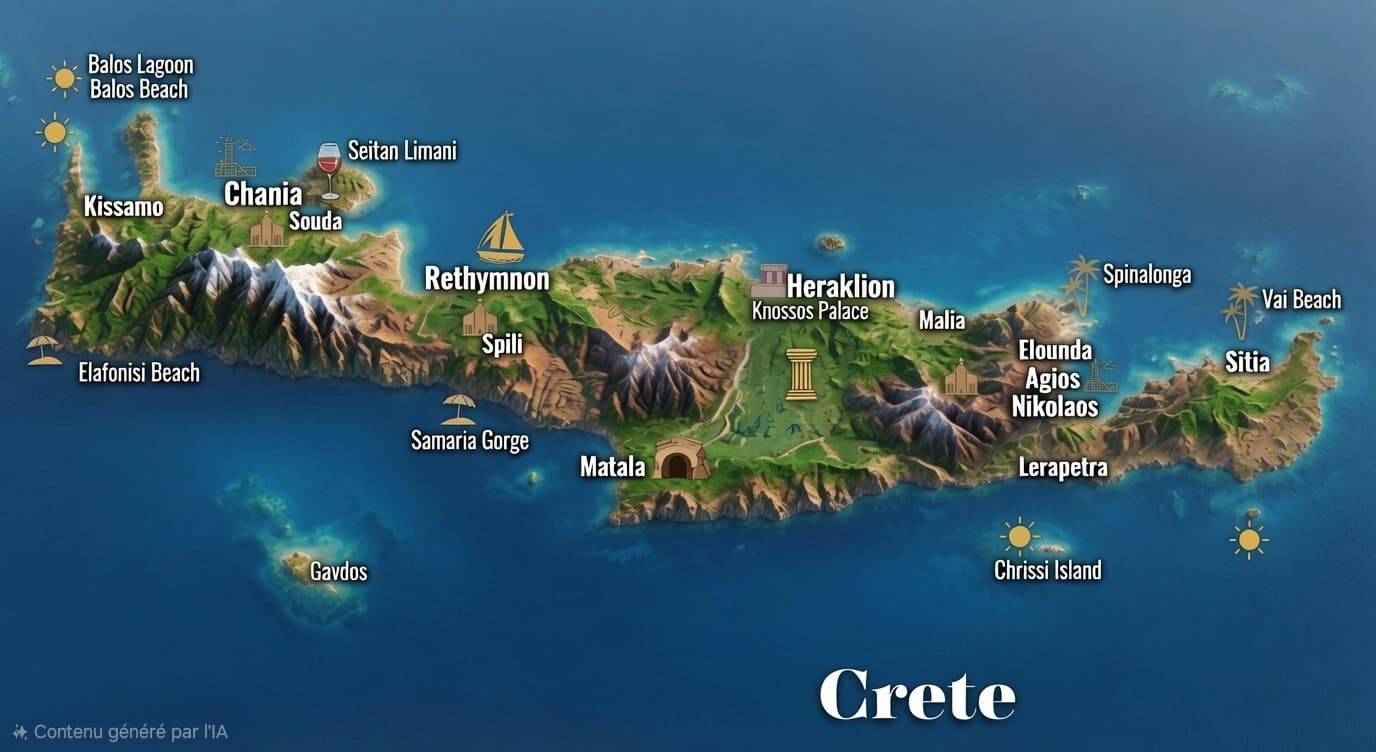
Crete attracts more digital nomads and expats every year. Internet, cost of living, healthcare, winter — this guide doesn't sell you a Mediterranean dream. It gives you the raw data to decide whether you can genuinely live and work there year-round.
Real-world connectivity
Cosmote is the dominant operator — it covers around 78% of the island with 4G/5G. Wind/Nova covers the main cities. In isolated villages off-season (Sfakia, Loutro, Paleochora), expect 2G or nothing at all.
Fibre is deployed in Chania, Heraklion and Rethymno. Elsewhere, copper ADSL remains the norm. Buy a Cosmote SIM at the airport on arrival — it's your universal safety net.
The Cretan winter: not what you're told
Crete has a winter. From December to February, temperatures drop to 8–12°C at night in the south and 4–8°C in mountain villages. Rainfall is heavy (November especially). The majority of tavernas, hotels and tourist businesses close.
The upside: rents drop 40–60% off-season. Villages regain their local life. Morning markets restart. But you need to heat. Electricity is among the most expensive in Europe — budget €150–250/month for heating.
Complete expatriate guide to CreteFrequently asked questions
Do French or EU citizens need a visa to settle in Crete?
No. Greece is in both the Schengen area and the EU. EU citizens can settle freely. However, they will need to register with the local town hall (Δήμος) for long-term residence and obtain a tax number (AFM) from the Tax Office (Ephoria).
Which is the best city to base yourself as a nomad?
Chania dominates: best infrastructure, richest cultural life, international airport, active expat community. Heraklion has more services but less charm. Rethymno is the ideal compromise for those who want quiet with essential amenities.
What internet connection do you need to work from Crete?
In town (Chania, Heraklion, Rethymno): fibre is available and apartment connections are often excellent. Outside towns: copper ADSL remains the norm. A Cosmote 4G/5G SIM card acts as a universal safety net — it covers 78% of the island. For travel and remote villages, a data eSIM is the best backup.